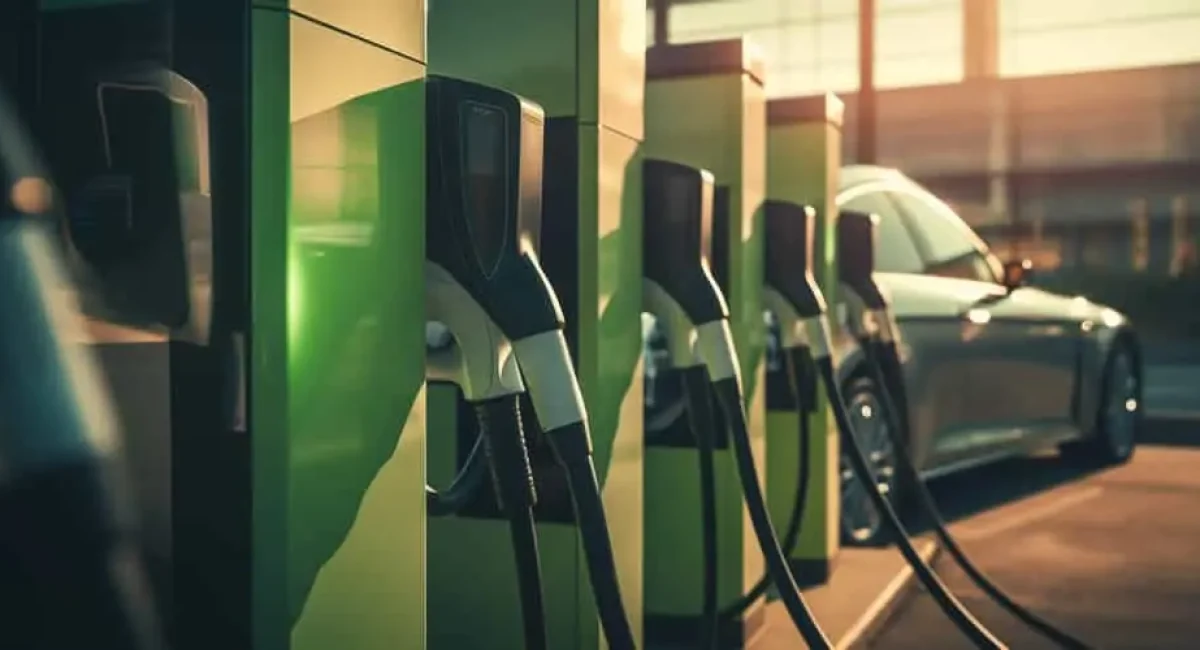
Electromobility is growing rapidly and with it the need for an efficient charging infrastructure. However, companies, logistics centres, supermarkets and car park operators often face a central hurdle: The existing grid connection is not sufficient.
One Fast charging station with 150 kW, 300 kW or more generates extreme peak loads. These can lead to massive cost increases or make the connection technically impossible. The solution is modern Battery storage systems (BESS). They act as an intelligent energy buffer, reduce the load on the grid and enable high-power charging (HPC) at almost any location.
Why fast-charging stations need battery storage
Many commercial locations have limited grid connection capacities. The direct provision of 300 kW for HPC chargers can often only be realised with lengthy approval procedures and extremely expensive grid expansion.
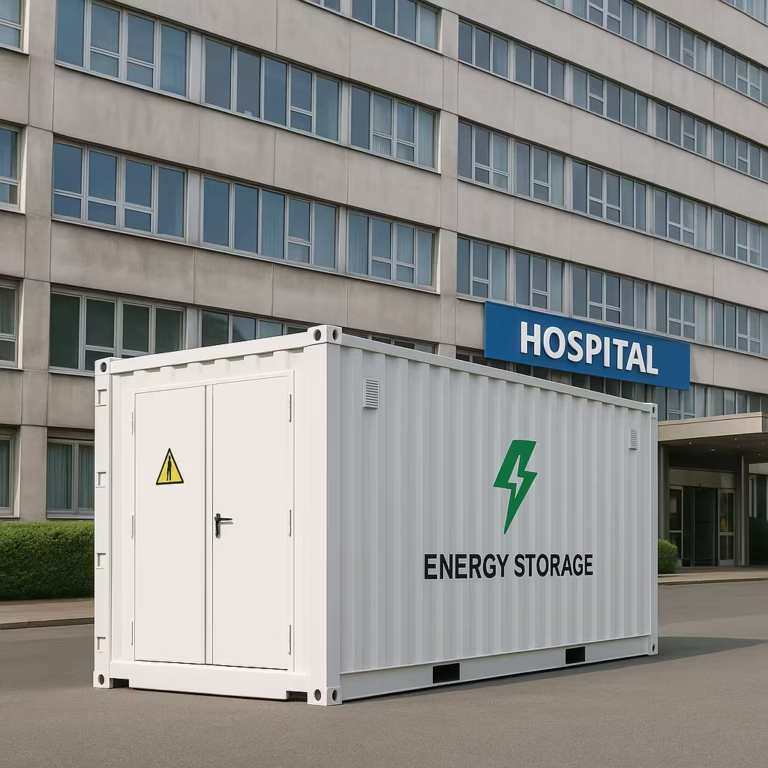
A Commercial warehouse (BESS) solves this problem through the principle of Intermediate storageThe storage system charges continuously at low power from the grid (or your own PV system) and delivers the energy to the vehicles at high power when required. The public grid therefore does not have to cover the peak load, but only the average consumption.
Your advantages at a glance:
- Cost savings: No expensive grid expansion or building cost subsidy necessary.
- Location flexibility: Fast charger can be installed almost anywhere.
- Reduce operating costs: Reduction of high power prices and grid charges.
- Fast realisation: No long waiting times for network operator upgrades.
Technology: How BESS stabilises the power grid
A battery storage system consists of high-performance battery modules, an inverter (PCS), an intelligent control system (EMS) and safety components. The system monitors the energy demand in real time.
Key functions for charging infrastructure:
- Peak shaving (load peak capping): The storage system intercepts expensive load peaks before they put a strain on the grid.
- Power Boosting: Provision of high charging power that the grid alone could not deliver.
- Grid stabilisation: Equalisation of voltage fluctuations for safe operation.
- PV integration: Direct use of own solar power for the e-fleet.
Important: The greater the capacity of the storage system, the greater the decoupling from the public power grid and the more charging processes can be buffered.
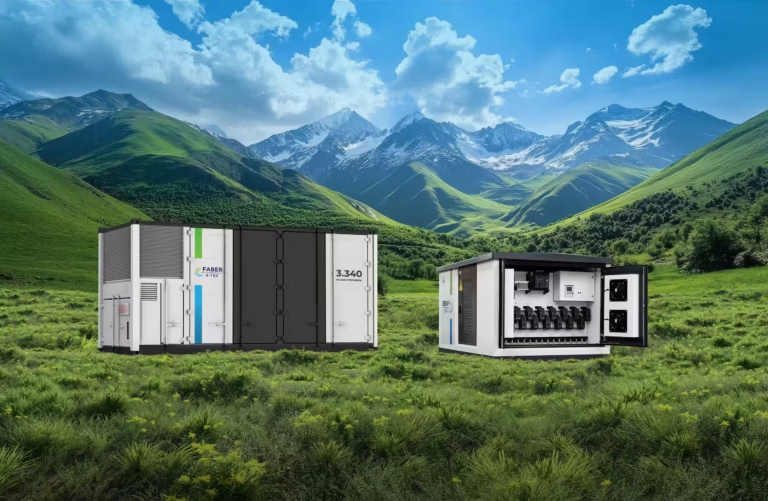
Our BESS solutions from Faber E-Tec
We offer scalable storage solutions that are precisely tailored to the requirements of loading hubs and industry:
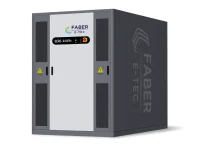
1. greencube 418 kWh - The compact entry-level solution
Ideally suited for locations with individual charging points in the area of 50 to 150 kW. Perfect for car dealerships or smaller company fleets.
2. greencube 835 kWh - power for charging hubs
The ideal choice for petrol stations or supermarkets with several 150 kW fast-charging stations. Ensures a stable supply even when charging several vehicles at the same time.
3rd BESS Container 5,015 kWh - Ultra-Fast Charging
With up to 2.5 MW output this container is designed for large charging parks, logistics centres and HPC locations. All systems can be optionally combined with compact transformer stations to ensure a standard-compliant medium-voltage connection.
Practical example: Economic efficiency through battery storage
The situation: A supermarket operator is planning to install three 150 kW charging points. However, the site only has a free grid capacity of 160 kW.
- Without memory: The project would be technically impossible or would cost a six-figure sum to expand the network.
- With BESS (835 kWh): The storage system buffers peak loads. The charging points can be operated at full power while the grid connection is protected.
The result: The operator saves massive investment costs and permanently reduces the energy supplier's monthly service charges.
Conclusion: BESS makes fast charging feasible everywhere
For companies, a battery storage system not only offers technical feasibility, but also Planning and cost certainty. Locations that were previously unsuitable for fast-charging infrastructure can now be fully utilised thanks to intelligent storage systems.