Reliable for solar parks of any size.
Compatible with all German medium-voltage networks, arc fault certified for nationwide use.
Faster implementation thanks to in-house production and semi-automated planning process.
Customised configuration of transformer power, voltage levels and balance circuits according to project requirements.
Solar park station Stuttgart for secure feeding and a cleanly constructed medium-voltage structure
- Solar park station Stuttgart precisely planned for feeding in, grid connection and later expansion stages
- Compact design with clear protection and switching structure
- End-to-end project management with Faber E-Tec
- Made in Germany - standard-compliant & future-proof
One Stuttgart Solar Park is the central technical point between PV generation and grid connection. This is where it is decided whether feeding in operates stably in everyday use, whether protection functions engage cleanly, and whether later capacity expansions remain possible without unnecessary modifications. For operators, this is a crucial factor, because the station must not only function at commissioning but also operate reliably and dependably for years to come.
Many solar projects are developed in stages. Capacity is expanded, partial areas are added later, or technical requirements change during the project's course. This is precisely why a Stuttgart Medium Voltage Substation It should not just be designed for the initial expansion stage. More important is a technical structure that sensibly plans for reserves while remaining clear during operation. If the field layout, protection concept, and documentation logically fit together, the system will remain stable and manageable even during later adjustments.
With Faber E-Tec The focus is on a solution geared towards long-term operational reliability and a clear medium-voltage logic. For projects in Stuttgart, this means a technical foundation that integrates feed-in, service, and expansion from the outset. Precisely this structure creates more stability in day-to-day operations, less friction, and better predictability for all involved.
Compact planning of solar farms and clear operation.
With a Stuttgart Solar Park It's not just the performance on paper that counts. In real-world operation, the internal layout of the station makes the difference. If switchgear is logically arranged, important components remain easily accessible, and protection technology is neatly integrated, maintenance and inspections can be organised much more efficiently. Even in the event of faults, the system is quicker to manage because its technical structure is clearly laid out.
This is particularly important for projects with growth potential. A station without reserve logic will become a bottleneck with the very first expansion. Conversely, a cleanly planned structure with sensible technical reserves creates scope for additional feed-in capacity without the entire medium-voltage side needing to be reorganised. This saves time, reduces rework, and keeps the system stable during ongoing operation.
In addition, a clear station architecture also brings organisational advantages. Operations, service, and technical planning work together more cleanly because statuses and options are more quickly identifiable. This increases quality in everyday work and ensures that adjustments do not have to be improvised under time pressure.
Coordinated network requirements, protection concept and project sequence cleanly at an early stage.
Many delays in solar projects arise not from individual components, but at the interfaces between planning, assembly, and commissioning. For a Stuttgart Solar Park This is why early agreement on the technical specifications is particularly important. Feed-in capacity, protection concept, station layout, and expansion targets must be brought together in a clear line from the outset.
If this pre-structuring is established early, decisions run considerably more smoothly. Approvals can be relied upon more quickly, queries decrease, and project progress remains more controllable. This not only improves schedule reliability but also the later operational quality, because the station is already properly prepared for real-world use during the planning phase.
For operators, this is a big advantage. The plant does not start with open issues, but with a clear technical direction for operation, maintenance, and expansion. It is precisely this early order that pays off later at every expansion stage.

for the safe mounting and operation of transformer and switching technology.
One Stuttgart transfer station In the solar sector, significantly more needs to be done than just technically enabling power feed-in. During ongoing operation, stable processes, clearly defined protective functions, and a structure that allows for maintenance and later adjustments without unnecessary interruptions are crucial. Therefore, the station should be planned from the outset to remain service-friendly and clearly organised, even under real-world conditions.
This point is particularly crucial for projects with growing feed-in capacity. A one-off project component becomes a robust infrastructure that supports the site long-term. This way, the Stuttgart Solar Park not only stable at project start but also when performance, area, or technical requirements grow later.
Reliable in continuous operation.
Designed for outdoor use
Customisable to project requirements.
For industry and infrastructure.
Stable and powerful.
Simply by crane.
Space-saving and efficient.
Arc fault certified for use throughout Germany.
We take over the engineering and obtain approval from the responsible energy supply company
Application areas for solar power stations in Stuttgart with a focus on grid feed-in, operational security, and a clean expansion pathway

Solar parks & ground-mounted PV systems

Charging infrastructure & electromobility

Battery Energy Storage Systems

Energy supply & municipal utilities

Agriculture & Agri-PV
Powerful solutions for agri-PV systems throughout Germany.

Industry & Trade
Compact stations as a robust solution for hybrid energy projects in Stuttgart
Not every project is a pure feeding-in solution. PV generation, self-consumption, and additional technical consumers are often planned together. A compactly designed medium-voltage solution creates a strong basis here because it cleanly integrates energy flows and keeps the technical structure clear. This is particularly useful when different load profiles act simultaneously at one location.
A clearly planned compact station also brings economic advantages. Areas can be used efficiently without maintenance or later expansion becoming unnecessarily complicated. If the station is designed to be service-friendly and reserves are sensibly integrated, operations remain calm and predictable even when changes occur.

Integrating e-mobility and PV feed-in cleanly within a medium-voltage structure
When E-mobility and PV generation come together at one location, the requirements for technical planning increase significantly. Feed-in, consumption and peak loads influence each other. A cleanly designed Stuttgart Medium Voltage Substation This lays the foundation for these energy flows to be controlled and for the station logic to remain stable even during later expansion phases.
For operators, this means greater control in their day-to-day operations. Charging capacity can grow incrementally without destabilising the grid connection. At the same time, the protection concept remains understandable and service calls can be better prepared. Precisely this technical order is important if a site is to be operated economically in the long term.

Solar power stations for Stuttgart with clear feed-in logic and technical reserve
One Stuttgart Solar Park It should be designed so that the feed operates cleanly today and future power steps can be added in an organised manner. Crucial is a well-thought-out station structure with clear switching logic, sensible protection coordination, and good accessibility for maintenance and service. If this foundation is sound, the plant will remain technically manageable even with increasing demands.
This is particularly important for operators, as PV projects rarely remain static in practice. Performance is adjusted, sections are expanded, or technical components are added. A well-planned solar farm station prevents such steps from unnecessarily burdening the existing structure. Instead, the medium-voltage side remains stable and can be further developed along a clear line.
With Faber E-Tec This creates a technical foundation that isn't just aimed at the initial project phase. The focus is on a solution that remains understandable during operation and can evolve with the project. This is precisely what ensures greater peace of mind in later expansion phases.
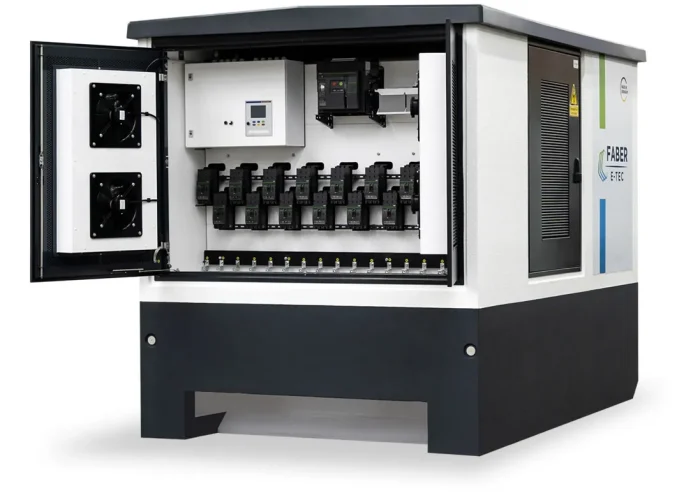
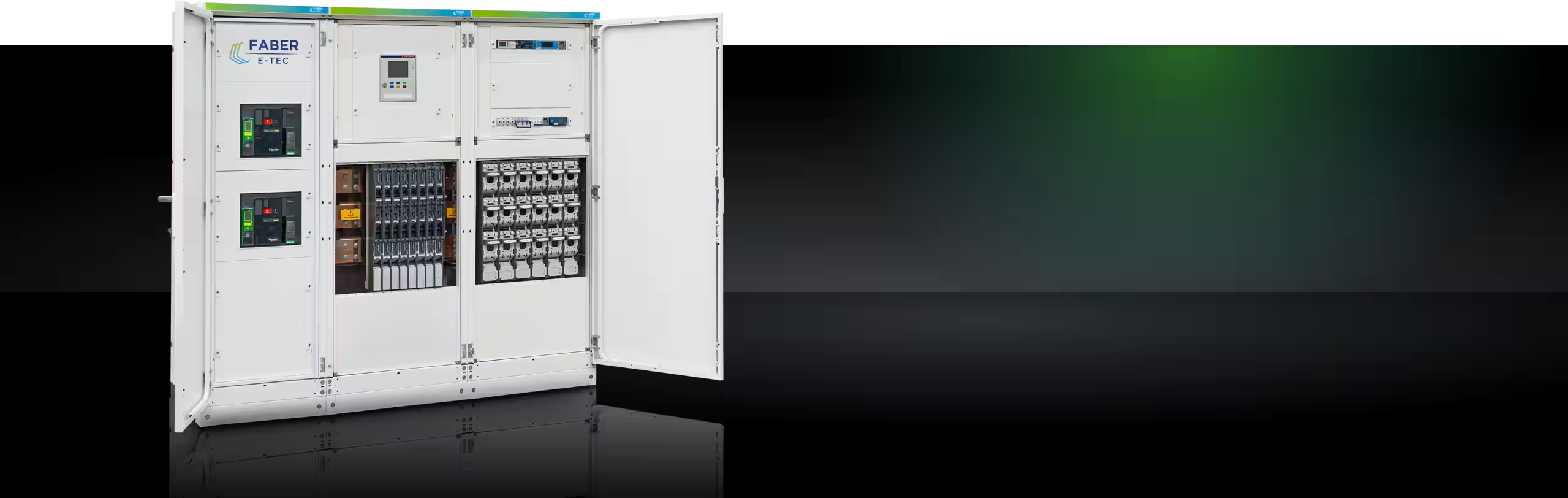
for safe and reliable power distribution in electrical installations.
EPC Solutions in Stuttgart with Clear Project Management from Planning to Commissioning
For solar projects with medium voltage, the biggest risks are often found at the interfaces between planning, execution, and commissioning. For a Stuttgart Solar Park is a clearly structured process therefore a distinct advantage. When technical decisions are agreed early and the project's progress is guided along a clear line, friction losses are significantly reduced.
An organised EPC approach brings more calm to the project, especially when several parties are involved. Responsibilities are clearer, approvals can be managed better, and the handover to operations is prepared smoothly. This saves time during implementation and simultaneously improves the quality of later plant operation, because technology and processes are considered together from the outset.
For operators, this means more predictability and fewer coordination loops. This precise structure is crucial if a solar project is to be implemented efficiently and operated stably in the long term.
Technical quality from Germany for solar projects with stable operating practice
In the medium-voltage range, trust is created through technical clarity and clean implementation. One Stuttgart Solar Park must remain comprehensible in everyday use, be able to be processed in a structured manner during maintenance, and also offer a stable foundation for extensions. Therefore, clean station logic is more important than a purely initial design that no longer fits the project later on.
For operators, quality is particularly evident during operation. If the switching structure, protection technology and documentation fit together perfectly, faults can be localised more quickly and adjustments can be implemented in a controlled manner. This reduces costs in existing systems and increases the reliability of the entire energy infrastructure.
With Faber E-Tec There is a focus on a technical claim aimed at durable solutions and clear operational structures. That is precisely what is important for solar projects in Stuttgart if the system is not only to impress at the start of the project but also to operate reliably in the long term.
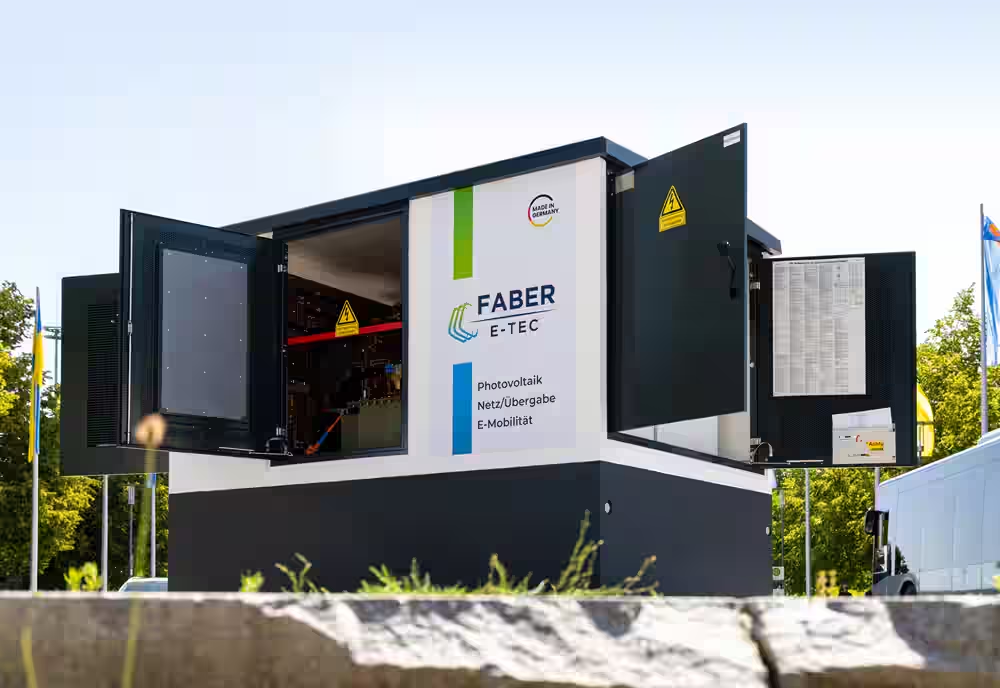
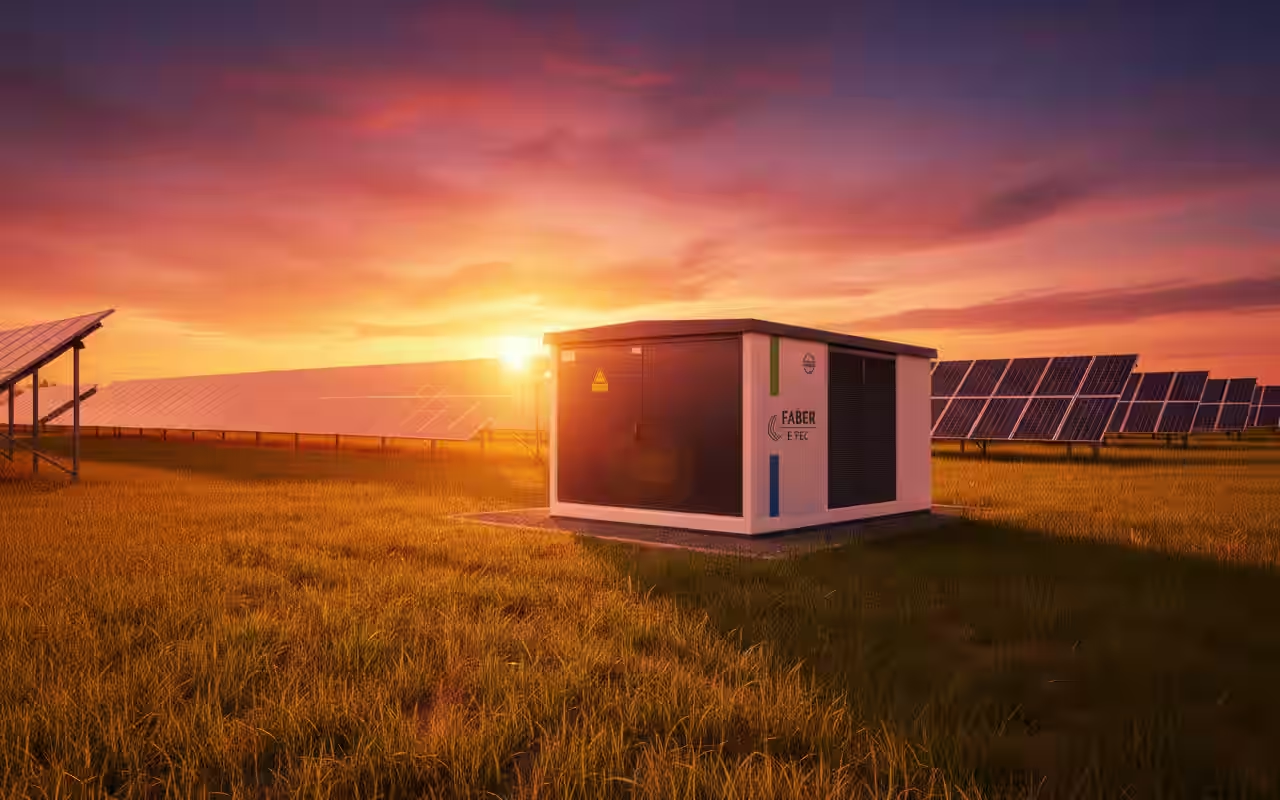
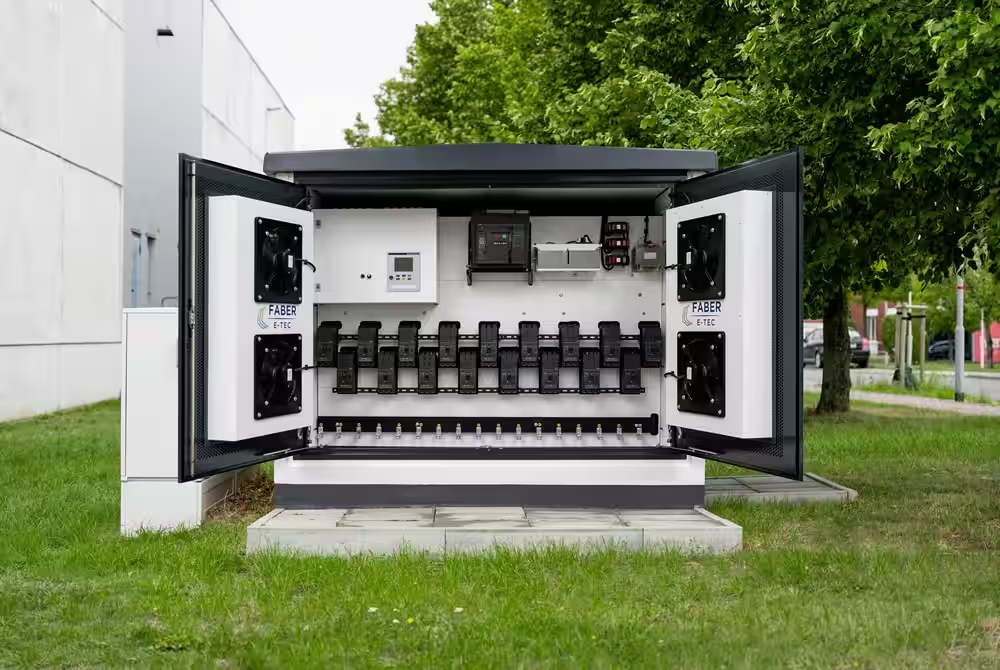
Enquire about the Stuttgart Solar Park station and launch the project with impeccable technical standards.
Whether a new PV project, expansion of the feed-in capacity or modernisation of an existing system: a clean start determines the quality of subsequent operation. If the feed-in power, area parameters, grid requirements and expansion targets are defined at an early stage, the Stuttgart Solar Park be planned precisely.
This reduces coordination loops, saves rework and creates a solution that remains stable even as the company grows. Good pre-planning ensures that technology, deadlines and subsequent expansions fit together from the outset and that operations can be run smoothly in the long term.
Those who clarify the technical fundamentals thoroughly at an early stage not only ensure a better project start but also a robust infrastructure for the coming years. This is precisely where the greatest advantage of structured planning lies.
Compact station Request a quote
"*" indicates required fields
Order solar park station directly now
"*" indicates required fields
E-mobility made easy with us!
"*" indicates required fields
7200 KW Secure container offer
"*" indicates required fields
"*" indicates required fields
Frequently asked questions about Stuttgart Solar Park Station
What information is important for the initial planning of a solar park station?
The planned feed-in power, the available area, the desired voltage level and the planned expansion stage are important. In addition, information on the later development of the project helps to ensure that the station can be planned with a sensible reserve structure from the outset.
How can a solar park station remain technically manageable in the event of later expansion?
A clear reserve logic in switch panels, protection technology and connection concept is crucial. The station should not only be designed for the initial state, but also for a realistic expansion path. This allows additional power steps to be integrated cleanly without having to rebuild the entire medium-voltage structure.
Why is protection coordination so important for PV feed-in?
Because it determines how the station reacts in the event of a fault and how selectively protective functions work. Proper protection coordination improves availability, reduces consequential risks and helps to localise faults more quickly. This is a key factor for smooth system operation.
What are the real benefits of good documentation during operation?
It saves time and increases safety. Maintenance, troubleshooting and subsequent adjustments can be implemented much more efficiently if the protection parameters, switching logic and station structure are clearly documented. This is a major advantage, especially for growing projects.