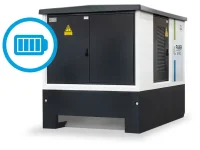
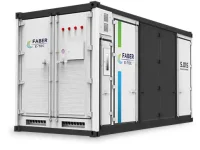
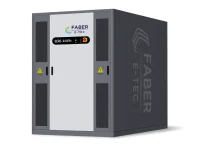
Reliable for solar parks of any size.
Compatible with all German medium-voltage networks, arc fault certified for nationwide use.
Faster implementation thanks to in-house production and semi-automated planning process.
Customised configuration of transformer power, voltage levels and balance circuits according to project requirements.
Solar Park Station Worms for stable supply and a medium voltage that prepares for later stages
- Solar park station Worms appropriately designed according to feed-in performance, operating mode and expansion stages
- Clear field structure and comprehensible protection logic for plannable inspections and service
- End-to-end project management with Faber E-Tec
- Made in Germany - standard-compliant & future-proof
One Solar Park Station Worms is the technical connection point between PV generation and the public grid. The initial state can usually be planned well. The difference becomes apparent later when additional inverters are added, outgoing connections are expanded, or the site grows in stages. It is in precisely these situations that the medium voltage decides whether expansion can be implemented smoothly or whether each new stage leads to interventions in the existing infrastructure.
For stable operation, it's not enough to just meet one performance metric. The internal logic of the station is crucial. Field layout, connection routing, protection technology, measurement, and documentation must form a cohesive system. If this system is consistently implemented, recurring tests will be more structured, service call-outs better prepared for, and faults diagnosed more quickly because the system remains understandable in daily operation.
Reserve is not created by general upscaling, but by structure. A prepared expansion path, clear expansion points and a protection coordination that remains consistent even in later operating states ensure that the station remains manageable in the long term.
Set up solar park stations compactly and keep them clearly organised during operation
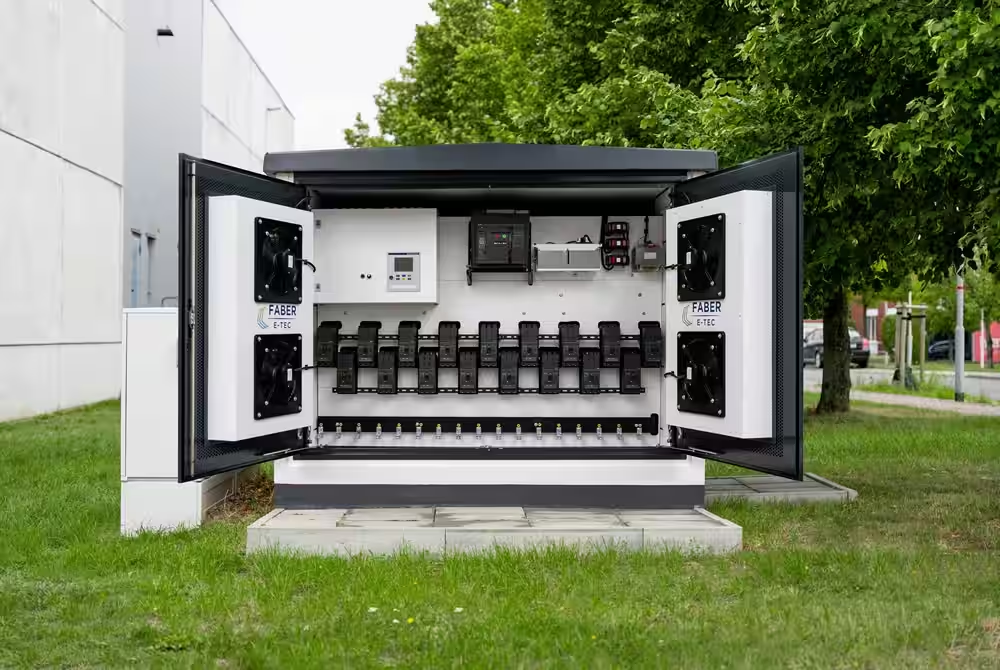
In operation, it counts whether you can read the station immediately. A clearly structured Worms Medium Voltage Substation This makes field assignments clear, markings unambiguous and service paths practical. Maintenance then begins not with searching, but with a clear process. This saves time, reduces sources of error, and shortens downtime for recurring checks.
Close coordination between field structure and protection functions is particularly important. If parameterisation remains understandable and selectivity functions properly, a fault condition is specifically limited. This protects availability, as it prevents more being disconnected than necessary. Operators consequently gain operational peace of mind and clear decision-making paths, even when expansions are made later.
Cleanly coordinate interfaces and make grid integration plannable
Many PV projects grow in stages. Without a prepared connection route, the next stage quickly becomes a modification to the existing setup. This leads to additional coordination requirements and unnecessary disruptions. Therefore, it is worthwhile to define the expansion path early on: where should later connections be made, how will the metering grow consistently, and how will the protection logic remain stable even with changing operating conditions.
If these guardrails are in place in the concept, expansion becomes calculable. New performance builds on the existing structure rather than breaking it down. This stabilises deadlines, reduces rework, and keeps the station clear even after further expansion stages.

for the safe mounting and operation of transformer and switching technology.
One Worms transfer station must function reliably for years. This includes maintenance, inspections, switching operations, and technical adjustments. That's why a design that allows for servicing is important: practical access, reachable components, and documentation that clearly represents the actual station status.
When switching logic and protection technology interact harmoniously, operation becomes more controllable. Service calls can be prepared in a targeted manner, faults can be localised more quickly and expansions can be implemented step by step. This means that the medium-voltage side remains stable, even if the site grows.
Reliable in continuous operation.
Designed for outdoor use
Customisable to project requirements.
For industry and infrastructure.
Stable and powerful.
Simply by crane.
Space-saving and efficient.
Arc fault certified for use throughout Germany.
We take over the engineering and obtain approval from the responsible energy supply company
Where a solar park station in Worms is particularly sensible: grid connection, expansion phases, repowering and hybrid sites

Solar parks & ground-mounted PV systems

Charging infrastructure & electromobility

Battery Energy Storage Systems

Energy supply & municipal utilities

Agriculture & Agri-PV
Powerful solutions for agri-PV systems throughout Germany.

Industry & Trade
Compact stations as a strong basis for mixed energy and feed-in concepts
Compact solutions are sensible when compactness does not come at the expense of maintenance and usability. A tidy arrangement of components, clear labelling and neat cable routing prevent service from being slowed down. Especially in confined spaces, order on the inside remains the most important factor.
If the station remains structured, later outlets can be added without blocking service routes or making the switching logic confusing. This means that compactness remains an advantage, even with further expansion stages.

Hybrid operation in Worms: cleanly coordinating PV, storage, and additional loads
As soon as storage systems or additional consumers are added to the site, the demands on the medium voltage increase. Feed-in, load peaks and new operating states affect the switchgear at the same time. This only becomes stable if the substation logic and protection coordination map these scenarios and priorities in the system remain clear.
Those who consider hybrid issues as an overall system at an early stage reduce conflicting objectives in terms of design and protection technology. New components can be neatly integrated without the station becoming technically disjointed or more difficult to control during operation.

Feed-in interface in Worms with clear handover logic and expansion reserve
One Solar Park Station Worms should reliably guide the infeed and at the same time enable expansion. The decisive factor is a field logic that makes the expansion path visible and a connection routing that can accommodate new outgoing feeders in a structured manner. If the measurement and protection concept match, the station remains comprehensible in everyday life and continues to develop in an organised manner.
If this structure is missing, typical follow-on costs arise due to additional coordination, replanning, and unnecessary interruptions. With a prepared expansion path, the next stage becomes plannable because the connection route and technical line are already defined.
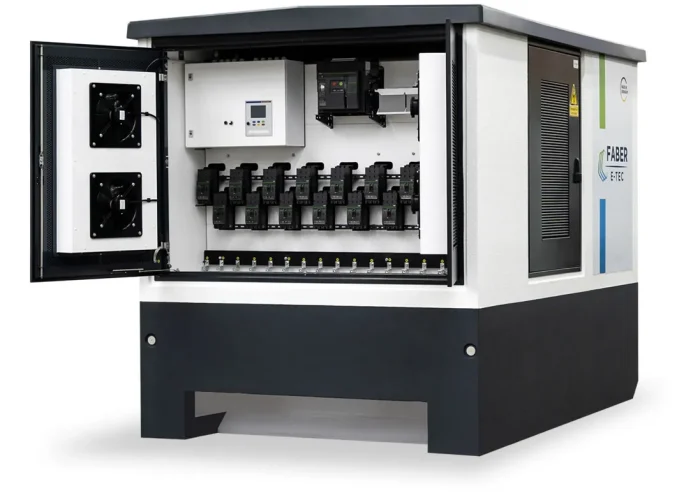
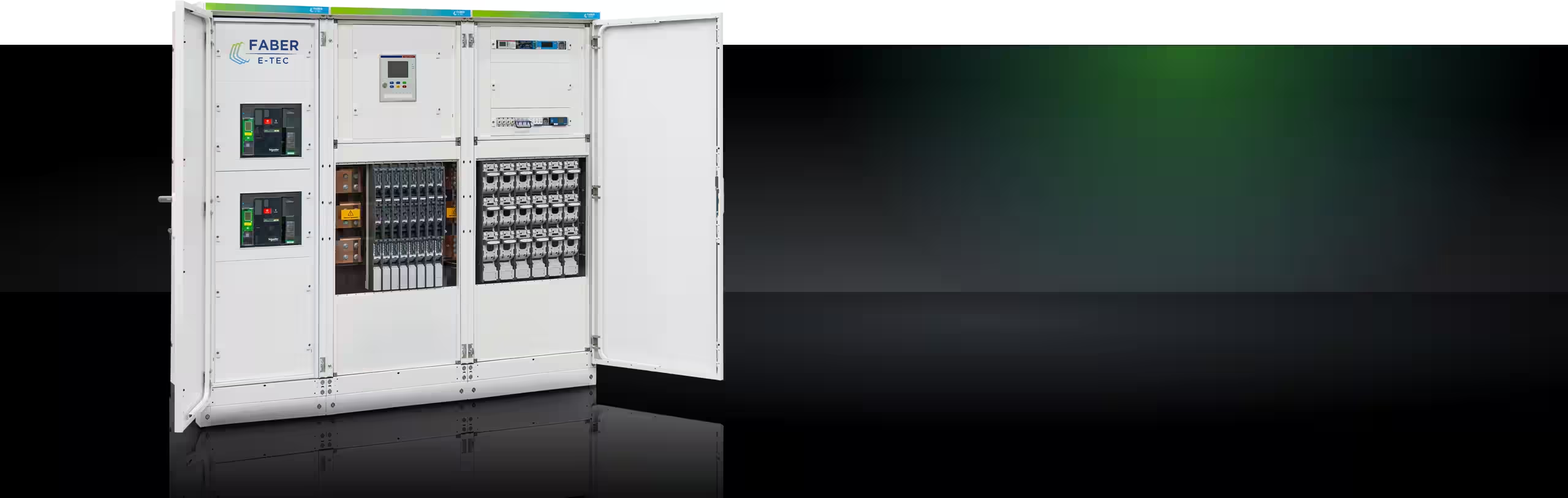
for safe and reliable power distribution in electrical installations.
EPC Solutions in Worms with clear responsibility and clean handover
If planning, procurement, realisation and commissioning are managed in one line, interface risks are noticeably reduced. Decisions become reliable earlier, checkpoints clearer and handovers cleaner. This reduces the coordination effort and ensures that the station starts operation without any unresolved issues.
Technical quality from Germany for solar projects with high operational reliability
In the medium-voltage range, trust is created during operation. One Solar Park Station Worms must be easy to understand, remain quickly accessible for servicing and function stably in the event of expansions. A clear structure, consistent protection logic and documents that reflect the actual structure make operation easier to plan and reduce risk.
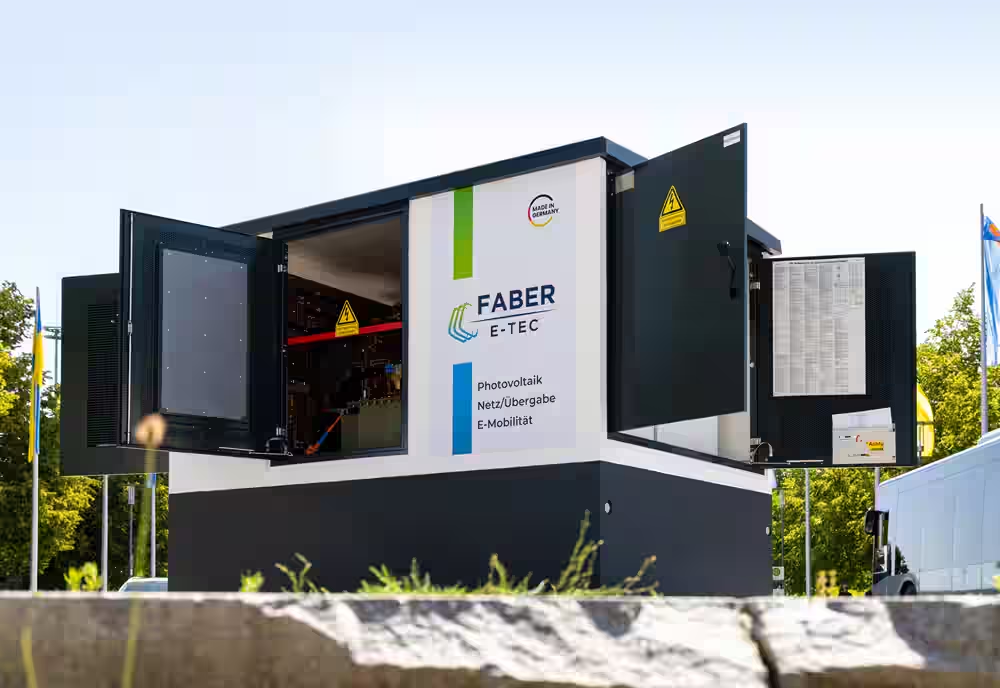
Enquire about the Worms Solar Park and start the planning cleanly
Stable operation begins with a clean start. If the feed-in power, available area, grid requirements and expansion targets are clear at an early stage, the Solar Park Station Worms be planned precisely. This reduces queries, avoids subsequent corrections and creates a solution that remains stable even as it grows.
Compact station Request a quote
"*" indicates required fields
Order solar park station directly now
"*" indicates required fields
E-mobility made easy with us!
"*" indicates required fields
7200 KW Secure container offer
"*" indicates required fields
"*" indicates required fields
Frequently asked questions about the Worms solar farm
What information is important for the initial planning of a solar park station?
The planned feed-in power, the available area, the desired voltage level and the planned expansion stage are important. In addition, information on the later development of the project helps to ensure that the station can be planned with a sensible reserve structure from the outset.
How can a solar park station remain technically manageable in the event of later expansion?
The decisive factor is a clear station logic instead of a pure initial design. If switch panels, protection technology and connection structure are properly prepared, additional power steps can be integrated in an organised manner. This keeps the system stable and makes subsequent conversions much easier.
Why is protection coordination so important for PV feed-in?
Because it determines how the station reacts in the event of a fault and how selectively protective functions work. Proper protection coordination improves availability, reduces consequential risks and helps to localise faults more quickly. This is a key factor for smooth system operation.
What are the real benefits of good documentation during operation?
It saves time and increases safety. Maintenance, troubleshooting and subsequent adjustments can be implemented much more efficiently if the protection parameters, switching logic and station structure are clearly documented. This is a major advantage, especially for growing projects.