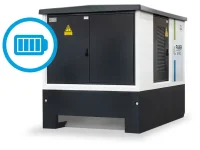
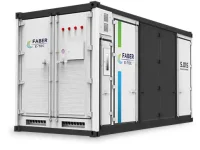
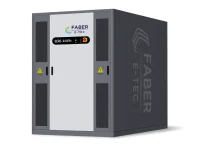
Reliable for solar parks of any size.
Compatible with all German medium-voltage networks, arc fault certified for nationwide use.
Faster implementation thanks to in-house production and semi-automated planning process.
Customised configuration of transformer power, voltage levels and balance circuits according to project requirements.
Compact Substation Transformers Cologne: space-efficient energy infrastructure for industry, commerce, logistics and public utilities
- Compact transformer substations for Cologne and the region
- Space-optimised design with full system function
- Planning, production & realisation from a single source
- Made in Germany - standard-compliant & future-proof
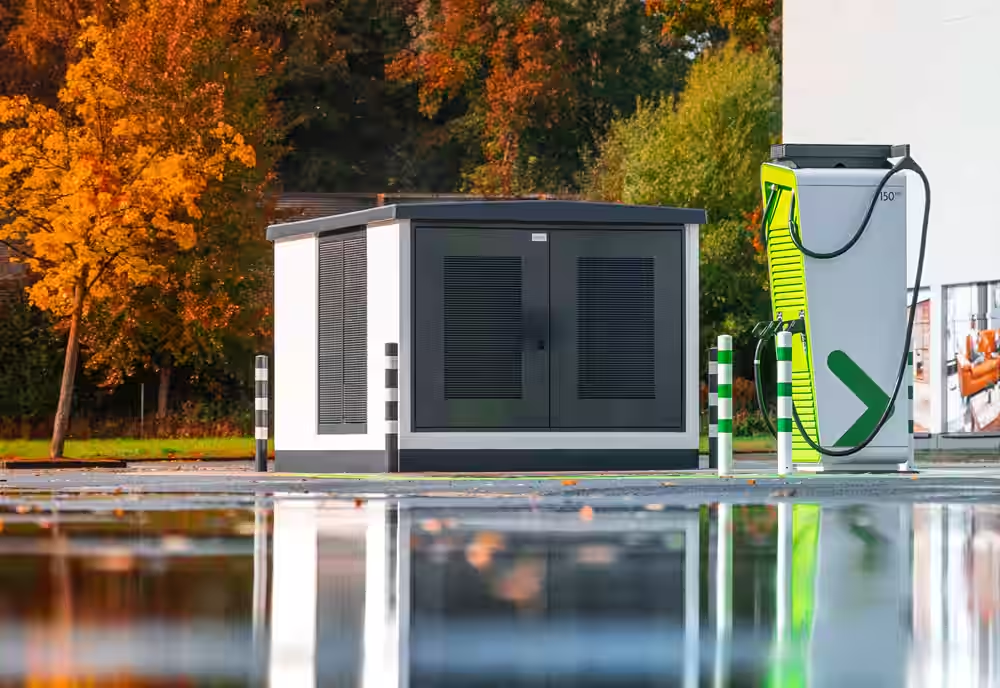
Cologne is a highly concentrated economic area with demanding energy requirements: commercial and industrial areas, logistics sites, public infrastructure and growing power demand meet limited space and tight implementation windows. It is precisely in this environment that Compact transformer substations in Cologne particularly efficient. They combine transformer, switchgear and protection technology in a compact unit, thus creating a stable network solution even in difficult space conditions.
Faber E-Tec develops compact substations that are custom-designed for specific projects, taking into account the grid connection point, load profile, site logic, and expansion goals. The technical design includes protection and switching concepts, targeted reserve planning, clearly defined interfaces, and robust documentation for operation and maintenance. This results in flexible energy hubs for real-world operations, rather than rigid standard substations. For projects in Cologne, this means improved schedule and cost certainty, reduced risk of additional costs, and infrastructure that stably meets current performance requirements and allows for controlled future expansions.
Compact network technology for Cologne: powerful performance in a small space
Whether for urban commercial properties, production sites, depots, or technical infrastructure areas, wherever energy needs to be reliably available, the compact substation offers a high-performance transfer point with a reduced footprint.
Faber E-Tec compact stations in Cologne are location-specific, structurally feasible, and operationally resilient.
Technical precision in the early stages drives projects forward
A lot of additional costs only arise when the protection concept, responsibilities, and interfaces are coordinated too late. Our approach starts earlier: structured requirements analysis, consistent protection/switching logic, and documentation with minimal gaps.
This significantly reduces coordination losses between planning, construction, and operation and improves the quality of commissioning.

for the safe mounting and operation of transformer and switching technology.
Faber E-Tec stands for precise engineering, high-quality components and production in Germany. Our compact transformer stations fulfil the relevant standards and safety requirements and are designed for long-term stability under dynamic load conditions.
The result for Cologne: high availability, clear maintenance processes and technical traceability over the entire lifecycle.
Reliable in continuous operation.
Designed for outdoor use
Customisable to project requirements.
For industry and infrastructure.
Stable and powerful.
Simply by crane.
Space-saving and efficient.
Arc fault certified for use throughout Germany.
We take over the engineering and obtain approval from the responsible energy supply company
Typical applications for compact transformer substations in Cologne

Solar parks & ground-mounted PV systems

Charging infrastructure & electromobility

Battery Energy Storage Systems

Energy supply & municipal utilities

Agriculture & Agri-PV
Powerful solutions for agri-PV systems throughout Germany.

Industry & Trade
Compact stations in Cologne: full system functionality in a reduced footprint
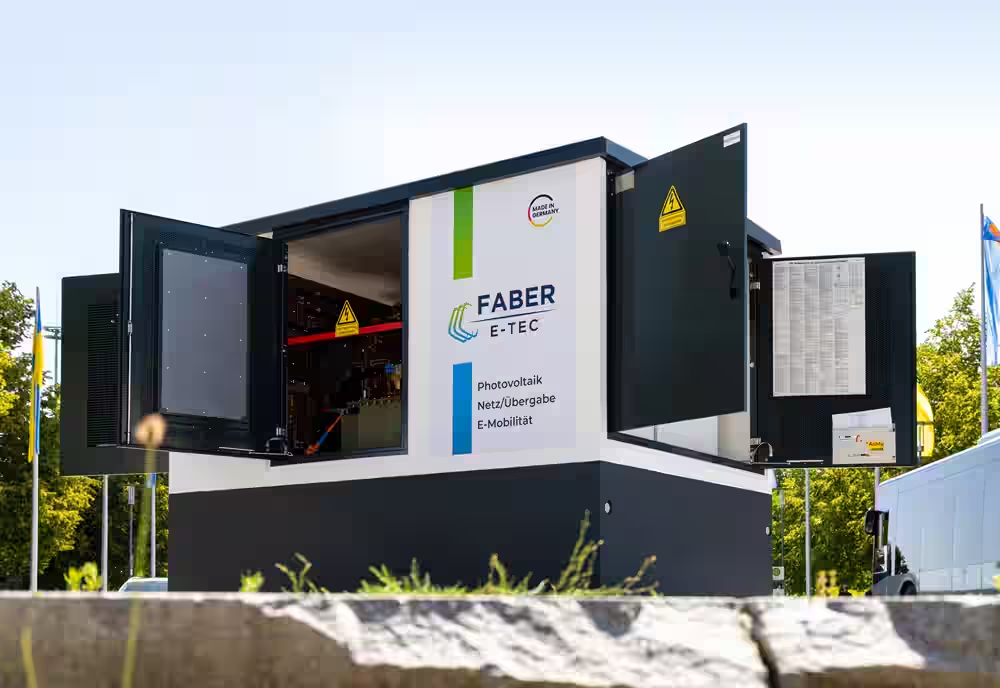
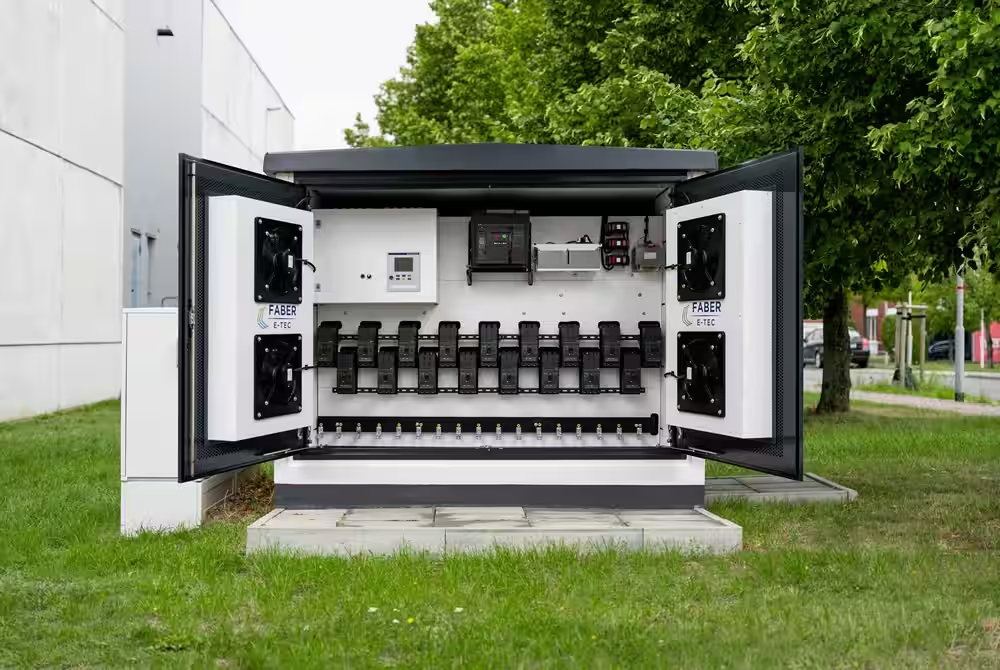
Our Compact and transfer stations for Cologne Integrate transformer, switchgear, and protection technology in a space-optimised architecture. This is ideal for urban locations, restricted building plots, and projects with high demands on operational reliability and implementation quality.

Expanding e-mobility in Cologne in a grid-stable manner: compact substations for real load surges
For charging parks, depot locations and commercial charging hubs, Faber E-Tec supplies compact stations that are tailored to actual simultaneity, load dynamics and expansion phases. This ensures that the quality of supply remains stable, even as charging capacity grows incrementally.

PV connection with structure: compact grid connection solutions for reliable feed-in
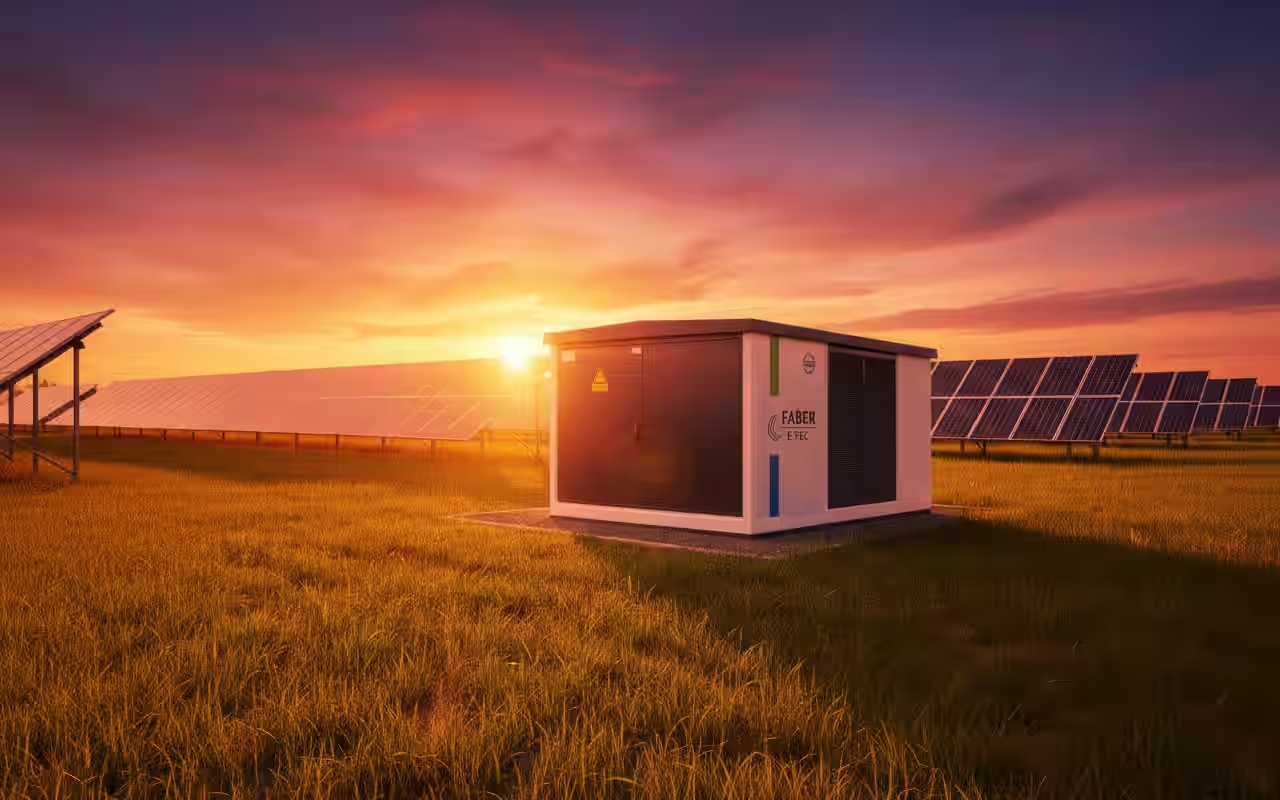
For larger feed-in projects, Faber E-Tec realises Solar park and grid connection stations with coordinated protection technology and a clear connection strategy. This improves grid stability, operational reliability, and economic predictability.
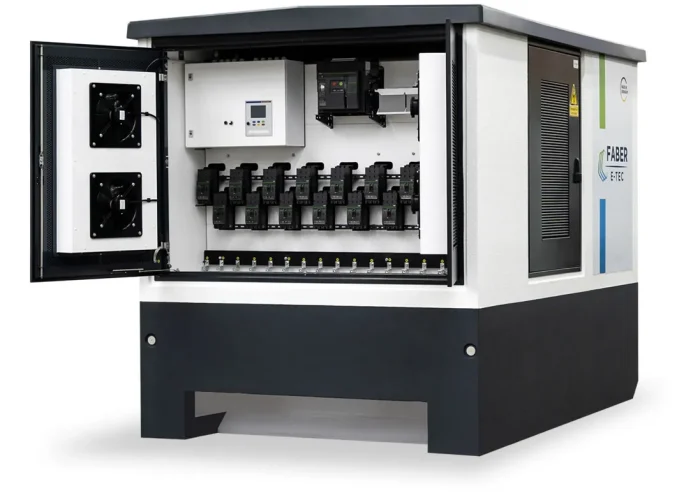
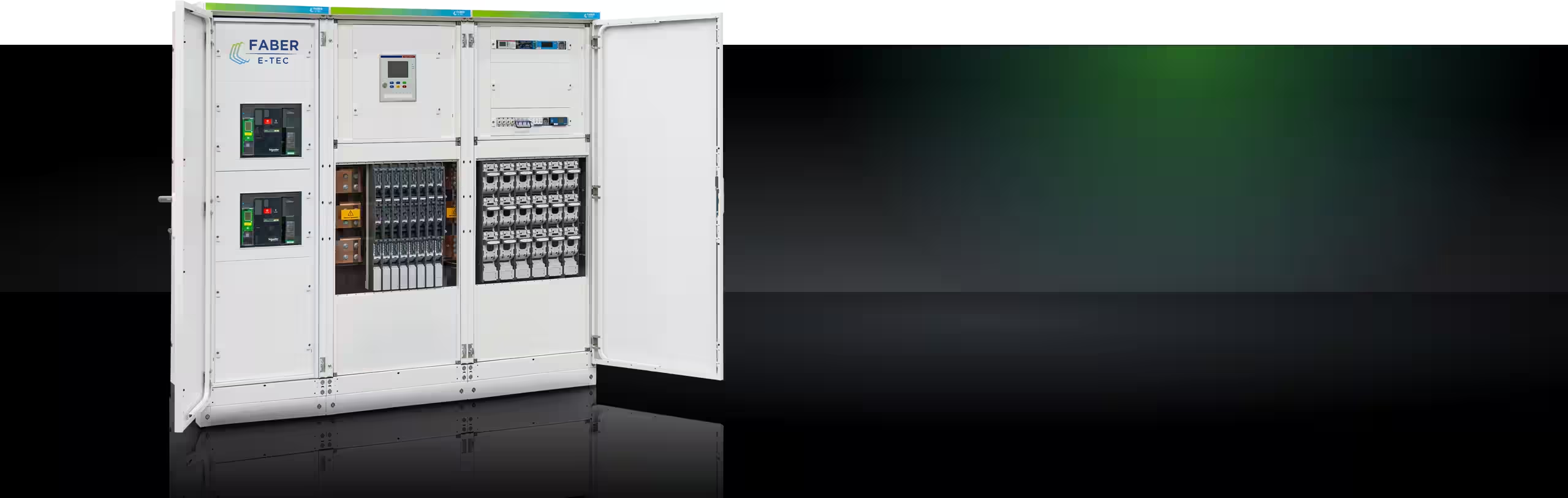
for safe and reliable power distribution in electrical installations.
EPC in Cologne: Central responsibility for complex energy projects
When many trades run in parallel, time windows are tight and technical dependencies are high, Faber E-Tec accompanies projects as an EPC partner from the concept phase to commissioning. This reduces coordination effort, accelerates decision-making and strengthens adherence to quality, costs and deadlines.
Quality that lasts - production, structure and reliability
All Faber E-Tec compact substations are developed and manufactured in Germany. This stands for consistent quality standards, reliable technical documentation, and high operational safety – a clear advantage for demanding projects in Cologne.
Request compact transformer substation Cologne with a technically sound approach from project start
Are you planning a project in Cologne with limited space and high power requirements? We will support you with a project-specific compact substation solution, from conception to realisation.
Compact station Request a quote
"*" indicates required fields
Order solar park station directly now
"*" indicates required fields
E-mobility made easy with us!
"*" indicates required fields
7200 KW Secure container offer
"*" indicates required fields
"*" indicates required fields
Frequently asked questions about transformer compact substations Cologne
A compact substation is particularly sensible in Cologne from a technical and economic perspective when it is needed to supply power to a small or medium-sized area, such as a residential development, a commercial park, or a new industrial site.
**Technically, a compact substation is advantageous when:**
* **Space is limited:** Compact substations are designed to be small and can be installed in confined spaces, making them ideal for densely populated urban areas like Cologne where finding large plots of land for traditional substations can be difficult and expensive.
* **Decentralised power supply is required:** They allow for a more decentralised power distribution network, bringing the transformation point closer to the end consumers. This reduces the length of medium-voltage cables, thereby minimising voltage losses and improving power quality.
* **Flexibility and modularity are needed:** Compact substations can often be tailored to specific needs and can be easily expanded or modified if demand changes. This offers greater flexibility compared to larger, more permanent installations.
* **Aesthetically sensitive areas:** Their compact and often modern design can be more visually appealing and less intrusive in urban landscapes or historic areas within Cologne.
* **Rapid deployment is necessary:** They can be pre-fabricated and installed relatively quickly, which is beneficial for new developments or upgrades.
**Economically, a compact substation is sensible when:**
* **Lower initial investment cost:** Compared to building a larger, traditional substation, the initial capital expenditure for a compact substation is typically lower, especially for smaller loads.
* **Reduced installation costs:** Due to their smaller size and pre-fabricated nature, installation labour and civil engineering costs are generally reduced.
* **Lower land acquisition costs:** The smaller footprint means less land is required, which can be a significant cost saving, particularly in prime urban locations in Cologne.
* **Minimised energy losses:** As mentioned, bringing the transformer closer to the load reduces technical losses in the distribution network, leading to long-term energy cost savings.
* **Simplified maintenance:** Often designed for easier access and maintenance, potentially reducing operational costs.
* **Meeting specific load demands efficiently:** They are designed to efficiently handle the expected power demand of a particular area without the overcapacity that might be present in a larger, general-purpose substation.
In summary, for Cologne, a compact substation is a smart choice when the demand is localised, space is at a premium, and a cost-effective, efficient, and flexible solution is required to deliver reliable power to a specific customer group or development.
When space is limited, construction timelines are tight, and high availability is demanded simultaneously. The compact station consolidates central functions in a small area and reduces integration effort in urban environments.
Which planning data are decisive for operational safety in everyday use?
It is not only the connection capacity and network level that are relevant, but above all the load profile, simultaneity, start-up behaviour, switching frequency, network situation and planned expansion stages. Only this holistic view leads to a stable protection and switching concept.
How can the station remain expandable without committing too much budget at the start?
Through targeted reserve planning in field structure, protection technology and layout instead of blanket oversizing. This keeps the initial investment economical, while subsequent performance upgrades are technically prepared.
Why is EPC often at an advantage for complex Cologne projects?
Because many parties involved, tight deadlines and demanding interfaces have to be coordinated. EPC bundles responsibility, reduces coordination losses and improves consistency from planning to commissioning.