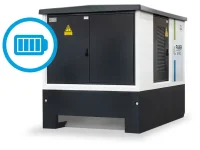
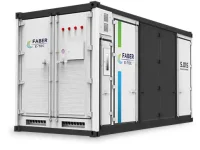
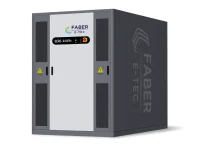
Reliable for solar parks of any size.
Compatible with all German medium-voltage networks, arc fault certified for nationwide use.
Faster implementation thanks to in-house production and semi-automated planning process.
Customised configuration of transformer power, voltage levels and balance circuits according to project requirements.
Flensburg Solar Park for reliable supply and medium voltage with a clean future reserve
- Flensburg Solar Park: Structured planning for grid connection, feed-in, and future expansion
- Flensburg medium-voltage substation with comprehensible field logic and consistent protection coordination
- End-to-end project management with Faber E-Tec
- Made in Germany - standard-compliant & future-proof
One Flensburg Solar Park It is the technical interface where generation becomes a stable grid operation. The connection itself is quickly explained; the actual quality becomes apparent later. When power needs to be increased, when additional outgoing feeders are required, or when the site expands in stages, the medium-voltage structure must not become a bottleneck. It is at this precise point that the decision is made as to whether expansion remains predictable or whether each step unnecessarily burdens the existing infrastructure.
For this to work, it needs more than just suitable dimensions. Flensburg Medium Voltage Substation It should be considered as a system: field division, connection routing, protection technology, and documentation must harmonise. If the station has a logical internal structure, interventions in the event of a service call will be safer, and extensions can be implemented much more neatly. This reduces downtime risks and saves coordination effort later on.
In everyday use, usability is also important. Operators and services need clarity: what reserve capacity is available, what expansion is planned, and how are protective functions coordinated. A well-planned station remains understandable even if requirements change. This turns the grid connection point into a reliable infrastructure decision that will last for years.
Technical order that saves time and nerves in operation
With a Flensburg Solar Park The internal structure is crucial. A clear field structure, easily accessible components, and unambiguous labeling ensure that inspections proceed in a structured manner and maintenance doesn't become a scavenger hunt. If switching logic and protection coordination are comprehensible, faults can be pinpointed more quickly. This reduces response times and minimises the risk of consequential problems.
It is precisely with later adjustments that the advantage of a well-organised station becomes apparent. Expansion then succeeds not through hectic retrofitting, but through prepared connection paths. Reserves are used sensibly because they are in the right places: in the field logic, in the connection strategy, and in protection technology that anticipates development. This way, the site remains stable even as performance grows incrementally.
Additionally, collaboration becomes easier. Operations, service, and technical responsibility can decide more quickly because the station remains legible and doesn't need to be reinterpreted with every change.
Less friction in the project through early technical clarity
Many delays arise at interfaces: network requirements, measurement concepts, protection parameters, station layouts, and commissioning must be brought together early on. If this alignment only happens late, follow-up questions, adjustments, and schedule changes will occur. This costs time and makes projects unnecessarily turbulent.
For a Flensburg Solar Park It's worthwhile to establish the key parameters early on. These include feed-in capacity, available space, realistic expansion stages, and how extensions will be technically connected. Once these fundamentals are clearly sorted, approvals will be more robust and the process more predictable. At the same time, the station won't start operation with unresolved issues, but with a structure that functions in everyday use.

for the safe mounting and operation of transformer and switching technology.
One Transfer Station Flensburg must prove itself over years. Maintenance intervals, checks, load changes and technical adjustments are part of this. A service-friendly design is therefore mandatory: access must be practical, components must remain reachable and documentation must clearly explain the actual construction.
When protection technology and switching logic are properly harmonised, operation becomes more controllable. Service calls can be prepared in a targeted manner, faults can be localised more quickly and expansions can be implemented step by step. This reduces downtime risks and ensures that the medium-voltage side remains stable even during growth.
Reliable in continuous operation.
Designed for outdoor use
Customisable to project requirements.
For industry and infrastructure.
Stable and powerful.
Simply by crane.
Space-saving and efficient.
Arc fault certified for use throughout Germany.
We take over the engineering and obtain approval from the responsible energy supply company
Application fields for solar farm stations in Flensburg for feeding in, expansion, and combined use

Solar parks & ground-mounted PV systems

Charging infrastructure & electromobility

Battery Energy Storage Systems

Energy supply & municipal utilities

Agriculture & Agri-PV
Powerful solutions for agri-PV systems throughout Germany.

Industry & Trade
Compact stations when space is at a premium and a clear overview is still a must
Compact solutions are strong when they remain logically organised despite limited space. Good accessibility, clean cable routing and clear labelling ensure that maintenance is not complicated. This is a real advantage for locations with limited space, because operation and service are not slowed down by confusion.
For mixed use, for example with self-consumption or additional consumers, a compactly structured medium-voltage solution helps to organise energy flows. The aim is to create a station that remains clearly organised and does not become a bottleneck during operation.

Integrating PV, storage, and electromobility in Flensburg using a medium-voltage logic
As soon as storage technology or electromobility becomes relevant at a site, the complexity increases. Feed-in, charging power, and peak loads simultaneously hit the medium-voltage side. A station logic that cleanly coordinates these requirements is then crucial, rather than later unsystematically shoving individual components into the existing infrastructure.
If these issues are considered together at an early stage, conflicts of objectives in the design of services and the protection concept are minimised. Expansions remain possible in stages, the ward grows in a controlled manner and remains comprehensible.

Solar power stations for Flensburg with clear feed-in guidance and prepared expansion path
One Flensburg Solar Park Feed-in should be stable and enable extensions without every adjustment becoming a conversion project. This is achieved when the station has a clear field logic, when connections are planned logically, and when the protection technology does not just reflect the initial state. This keeps the station manageable in everyday use and allows it to be cleanly developed further in expansion stages.
Without structured preparation, typical follow-on costs arise: modifications to existing structures, additional coordination, and unnecessary downtime. With sensibly planned reserves in the station structure, performance steps become predictable because the connection path is already provided for.
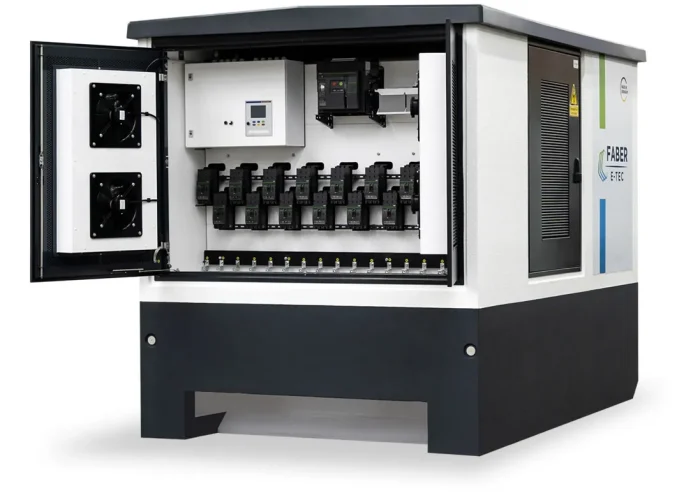
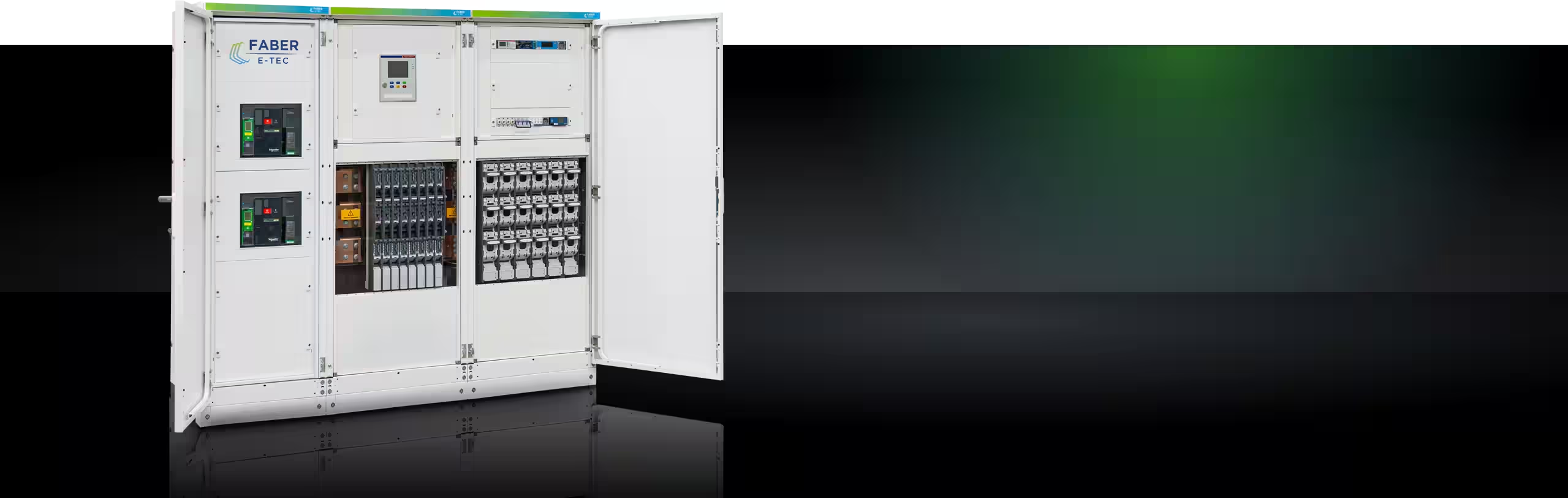
for safe and reliable power distribution in electrical installations.
EPC Solutions in Flensburg with clear responsibility and clean handover
When engineering, procurement, realisation and commissioning are managed in one line, interface risks are noticeably reduced. Decisions become reliable earlier, checkpoints become clearer and handovers become cleaner. For a Flensburg Solar Park This means less coordination effort and a project start that does not burden operations with unresolved issues.
Technical quality from Germany for long-term stable energy infrastructure
In the medium-voltage range, trust is based on suitability for everyday use. A Flensburg Solar Park must be clearly structured, remain quickly accessible in the event of servicing and function stably in the event of expansions. A clear structure, clean protection logic and documents that reflect the reality of the station reduce risk and make operation easier to plan.
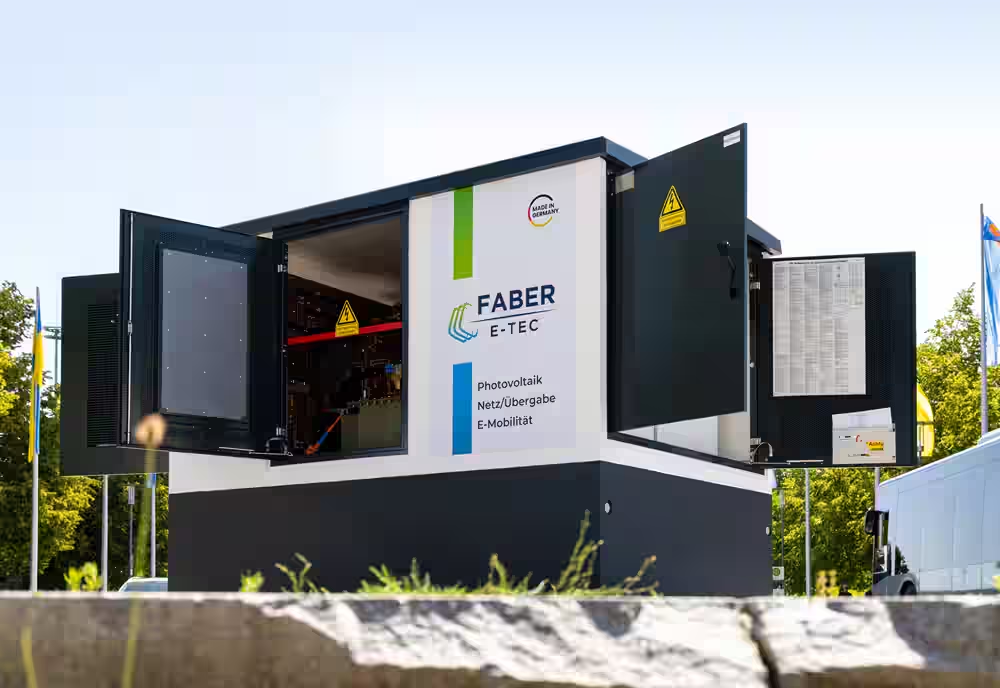
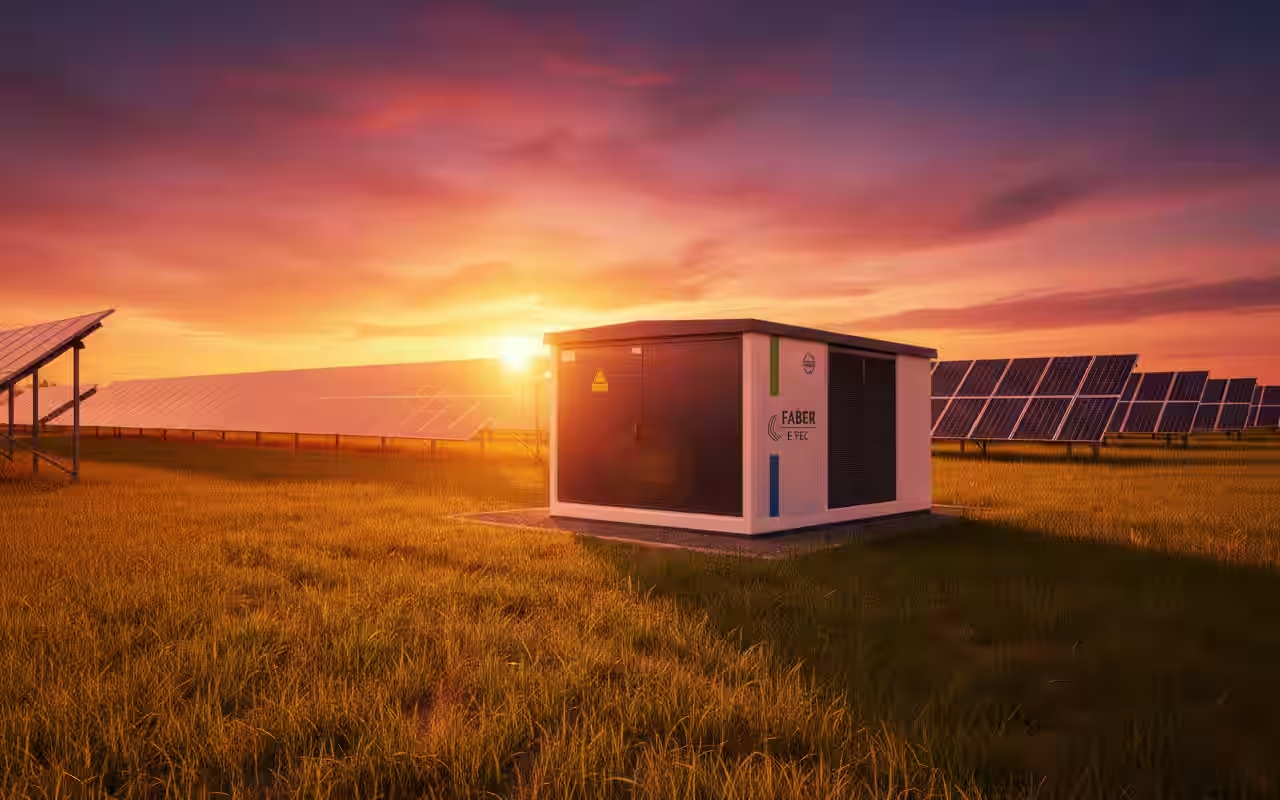
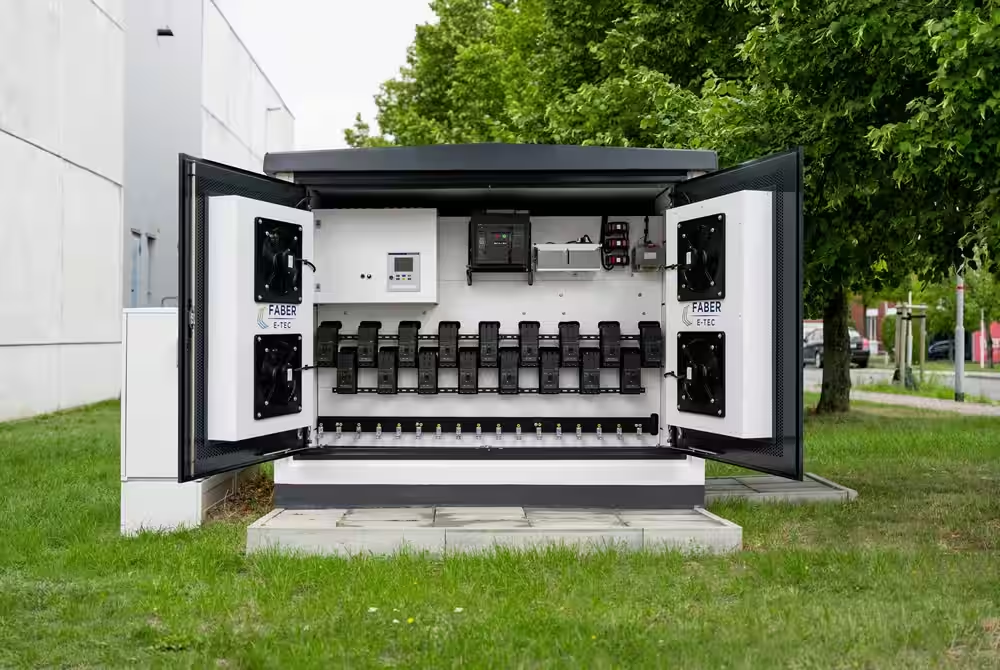
Enquiries about the Flensburg Solar Park and structuring the project launch cleanly
Smooth operation begins with a clean start. If the feed-in power, area, grid requirements and expansion targets are clear at an early stage, the Flensburg Solar Park be planned precisely. This reduces queries, avoids later corrections and creates a solution that remains stable even as the company grows. Thinking about the expansion route at an early stage saves conversion time and downtime later on.
Compact station Request a quote
"*" indicates required fields
Order solar park station directly now
"*" indicates required fields
E-mobility made easy with us!
"*" indicates required fields
7200 KW Secure container offer
"*" indicates required fields
"*" indicates required fields
Frequently asked questions about the Flensburg solar park
What information is important for the initial planning of a solar park station?
The planned feed-in power, the available area, the desired voltage level and the planned expansion stage are important. In addition, information on the later development of the project helps to ensure that the station can be planned with a sensible reserve structure from the outset.
How can a solar park station remain technically manageable in the event of later expansion?
The decisive factor is a clear station logic instead of a pure initial design. If switch panels, protection technology and connection structure are properly prepared, additional power steps can be integrated in an organised manner. This keeps the system stable and makes subsequent conversions much easier.
Why is protection coordination so important for PV feed-in?
Because it determines how the station reacts in the event of a fault and how selectively protective functions work. Proper protection coordination improves availability, reduces consequential risks and helps to localise faults more quickly. This is a key factor for smooth system operation.
What are the real benefits of good documentation during operation?
It saves time and increases safety. Maintenance, troubleshooting and subsequent adjustments can be implemented much more efficiently if the protection parameters, switching logic and station structure are clearly documented. This is a major advantage, especially for growing projects.