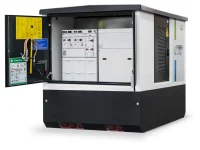
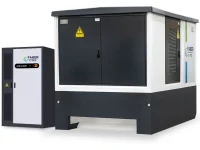
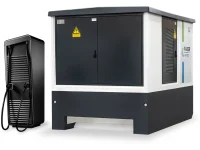
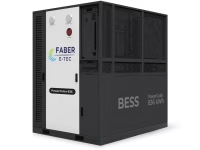
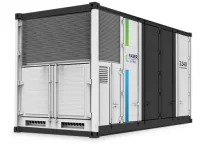
Reliable for solar parks of any size.
Compatible with all German medium-voltage networks, arc fault certified for nationwide use.
Faster implementation thanks to in-house production and semi-automated planning process.
Customised configuration of transformer power, voltage levels and balance circuits according to project requirements.
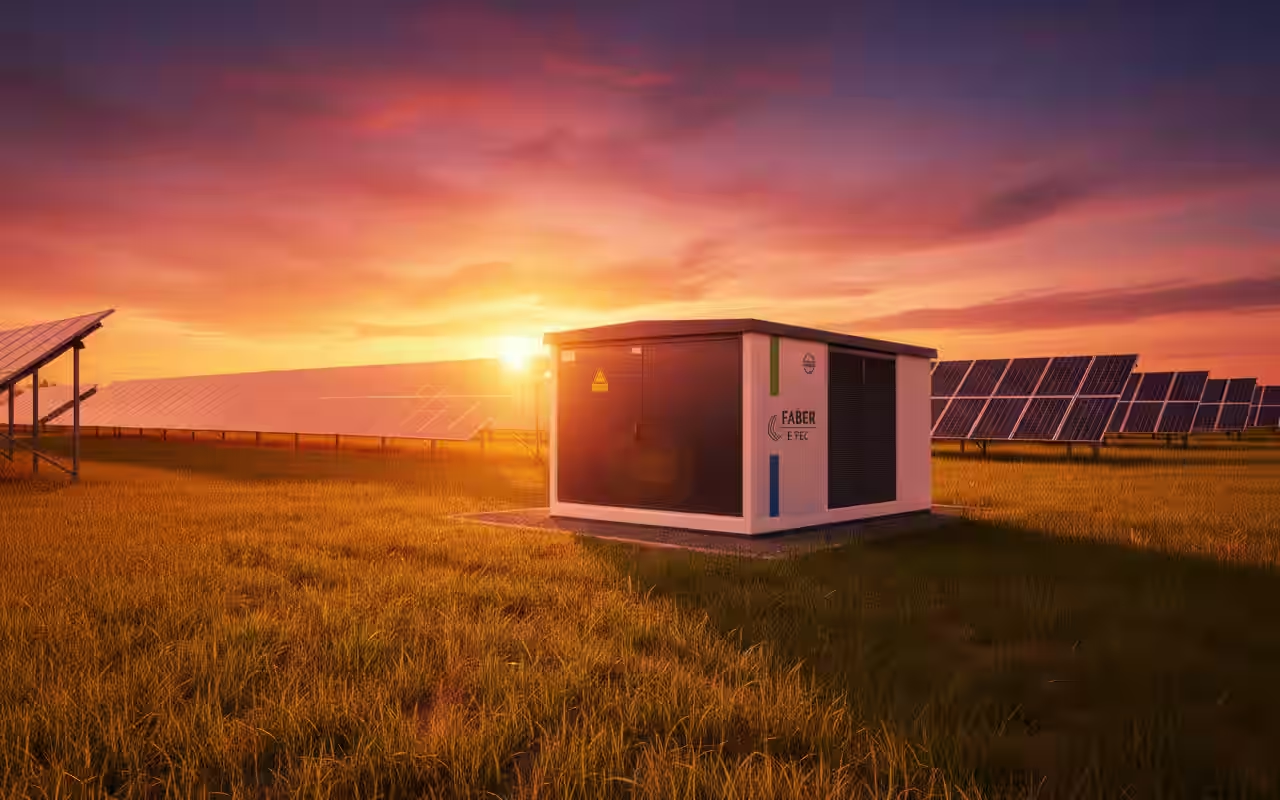
Hannover solar park station for grid-stable feed-in and expandable medium voltage
- Hannover solar park station custom-planned for feed-in, grid connection and subsequent expansion stages
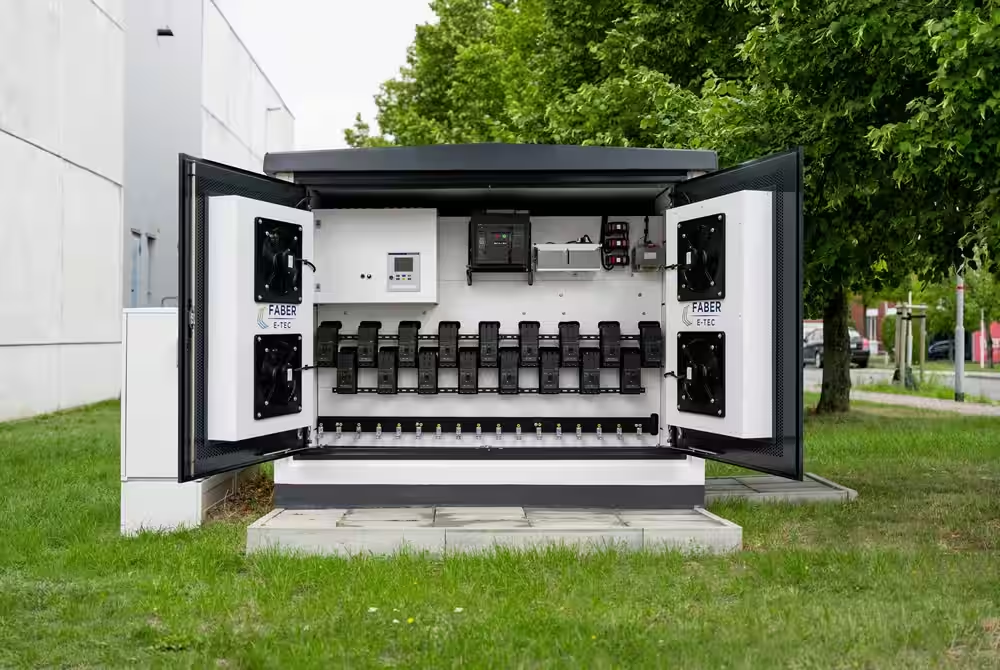
- Compact design with clear protection and switching structure
- End-to-end project management with Faber E-Tec
- Made in Germany - standard-compliant & future-proof
One Hanover solar park station is the central connection between PV generation and the public grid. It is precisely at this point that it becomes apparent whether a project has been set up with technical soundness. Feed-in must run stably, protection functions must react clearly in the event of a fault, and future capacity upgrades must not lead to unnecessary retrofits. For operators, this is crucial because the substation directly influences subsequent operational safety.
In many projects, performance does not remain permanently at the initial configuration stage. New areas, additional inverters or changed load requirements alter the initial technical situation over time. Therefore, a Medium-voltage substation Hanover not only be designed for launch, but for a realistic development path. A clean field structure, logically planned protection technology and clear documentation form the technical basis for this.
If this structure is correct from the outset, daily operations become significantly calmer. Maintenance can be better prepared, adjustments remain predictable, and service calls run more efficiently. A pure connection unit thus becomes a resilient infrastructure that reliably supports the site even during growth.
With Faber E-Tec the focus here is on a solution that does not view medium voltage in isolation, but as a long-term operational basis. For projects in Hanover, this is a clear advantage when feeding in power, expansion and operation are meant to fit together right from the start.
Plan station architecture so that maintenance and expansion fit together
With a Hanover solar park station it is not only performance that determines quality, but above all the internal layout. When switchgear is sensibly structured, important components remain easily accessible and the protection concept has a logical design, clear advantages emerge during operation. Testing becomes more structured, maintenance appointments can be organised more cleanly and faults can be isolated more quickly.
This becomes noticeable early on, especially in projects with multiple expansion stages. A substation without a reserve structure quickly turns into a bottleneck as soon as additional feed-in capacity is added. By contrast, a technically sound planned substation creates scope for extensions without the complete medium-voltage side having to be reorganised.
Sort out grid connections technically at an early stage and keep project timelines stable
Many delays do not arise from individual components, but from unclear interfaces in the project workflow. Infeed capacity, grid requirements, protection parameters, substation layout and commissioning must interlock smoothly. For a Hanover solar park station is therefore a key success factor for early technical coordination.
If these fundamentals are defined at the beginning, approvals run much more smoothly. Decisions become reliable more quickly, follow-up questions decrease and overall progress remains more predictable. This not only brings greater schedule reliability, but also a higher technical quality during subsequent operation.

for the safe mounting and operation of transformer and switching technology.
One Hannover transfer station in the solar sector must function reliably in everyday use. During ongoing operation, stable processes, clear protective responses and a structure that permits maintenance and technical changes without unnecessary interruptions count. Therefore, the station should be designed not only for commissioning, but for actual use over many years.
This is particularly crucial for projects with potential for expansion. A cleanly planned Hanover solar park station remains manageable even when additional generation is integrated. This creates an infrastructure that not only gets off the ground, but is sustainable in the long term.
Reliable in continuous operation.
Designed for outdoor use
Customisable to project requirements.
For industry and infrastructure.
Stable and powerful.
Simply by crane.
Space-saving and efficient.
Arc fault certified for use throughout Germany.
We take over the engineering and obtain approval from the responsible energy supply company
Application areas for solar park stations in Hanover from PV feed-in to hybrid site concepts

Solar parks & ground-mounted PV systems

Charging infrastructure & electromobility

Battery Energy Storage Systems

Energy supply & municipal utilities

Agriculture & Agri-PV
Powerful solutions for agri-PV systems throughout Germany.

Industry & Trade
Compact substations as an efficient solution for sites with mixed loads
Not every location is a pure feed-in system. PV generation, self-consumption and additional loads are frequently combined in a shared energy system. A compact medium-voltage solution is particularly useful here because it bundles energy flows and organises them in a technically clean way.
A well-planned compact substation not only brings benefits in terms of space utilisation. It also improves operability, because maintenance and future modifications remain easier to implement when the structure has a clear and service-friendly design. Especially with changing load profiles, this is a major advantage.

properly coordinate PV and e-mobility at a medium-voltage level
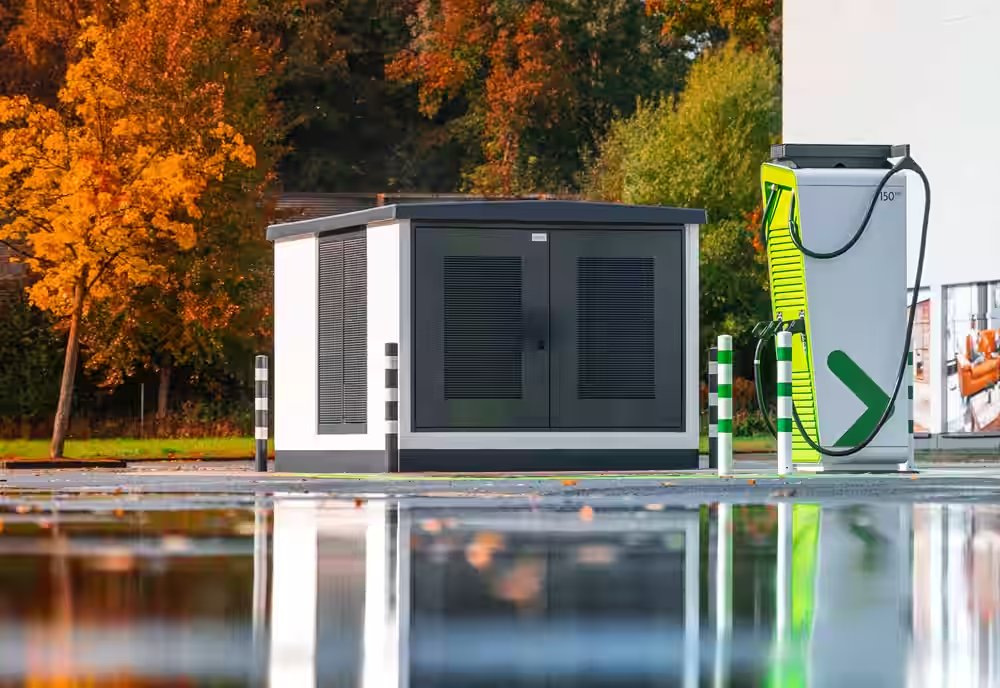
When E-mobility and PV generation are planned together at a single site, the demands on medium-voltage planning increase significantly. Feed-in, charging power and peak loads act on the infrastructure in parallel. A properly designed Medium-voltage substation Hanover ensures that these requirements can be merged in a controlled manner.
This is particularly important because charging infrastructure often grows faster than originally planned. Without a clear structure, bottlenecks in power rating or uncertainties in the protection concept quickly arise. With clean medium-voltage planning, on the other hand, the site remains flexible and technically stable.

Solar park stations for Hanover with a reserve structure and clear protection line
One Hanover solar park station should be planned in such a way that it reliably processes the current feed-in capacity while simultaneously offering room for future expansions. A medium-voltage structure that sensibly integrates protection technology, switching logic, and accessibility is crucial. This is the only way to ensure the substation remains clear in everyday operation and technically robust as demands increase.
In practice, many subsequent costs arise where the station was only tailored to the initial state. Additional performance steps then lead to conversion effort, longer coordination processes and unnecessary complexity. A well-thought-out reserve structure prevents precisely this and keeps the technical line stable.
For operators in the Hanover region, this is particularly relevant when projects are implemented in phases. With a clearly structured solar farm substation, expansion can take place in an orderly manner without unnecessarily disrupting ongoing operations.
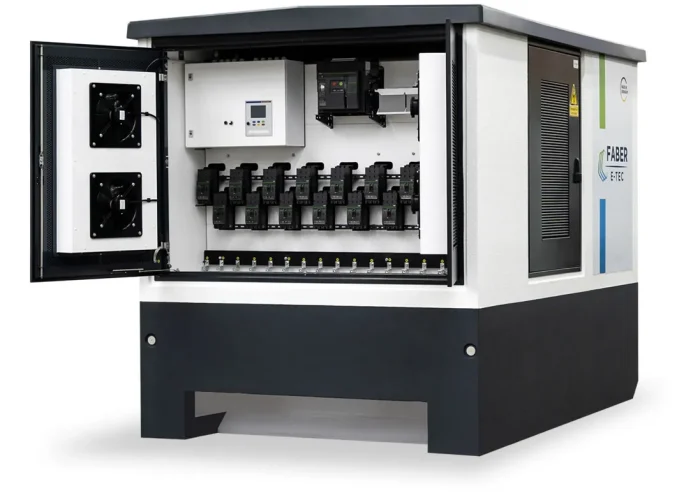
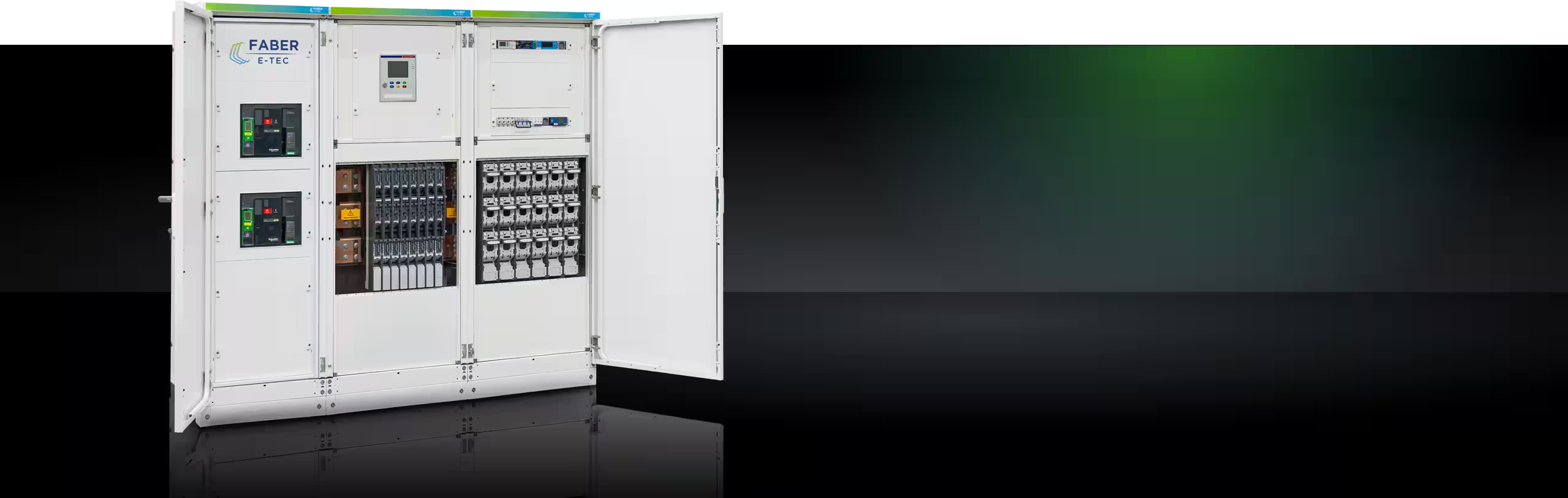
for safe and reliable power distribution in electrical installations.
EPC solutions in Hannover with clear interfaces and reliable project management
In medium-voltage solar projects, the greatest risks often lie at the interfaces between engineering, implementation and commissioning. For a Hanover solar park station therefore a well-structured EPC process brings tangible benefits. Technical decisions are coordinated earlier and the overall project progression remains more stable.
A clear EPC approach creates transparency regarding responsibilities, approvals and technical inspection points. Queries can be clarified earlier, interfaces remain traceable and the handover to operations is properly prepared. This reduces friction losses and improves execution quality.
Quality-focused engineering from Germany for a reliable energy infrastructure
In the medium-voltage sector, trust is built through technical clarity and clean execution. A Hanover solar park station must remain traceable in daily operations, be designed for easy servicing, and function stably even during expansions. Precisely for this reason, well-thought-out station logic is more important than a purely initial layout.
For operators, quality is demonstrated above all in practice. When switching topology, protection technology and documentation work together harmoniously, faults can be isolated more quickly and measures implemented properly. This improves availability and reduces effort during ongoing operations.
With Faber E-Tec this focuses on a quality standard geared towards durable technology and a clear operating structure. For projects in Hanover, this creates a reliable basis for grid feed-in, maintenance and future development.
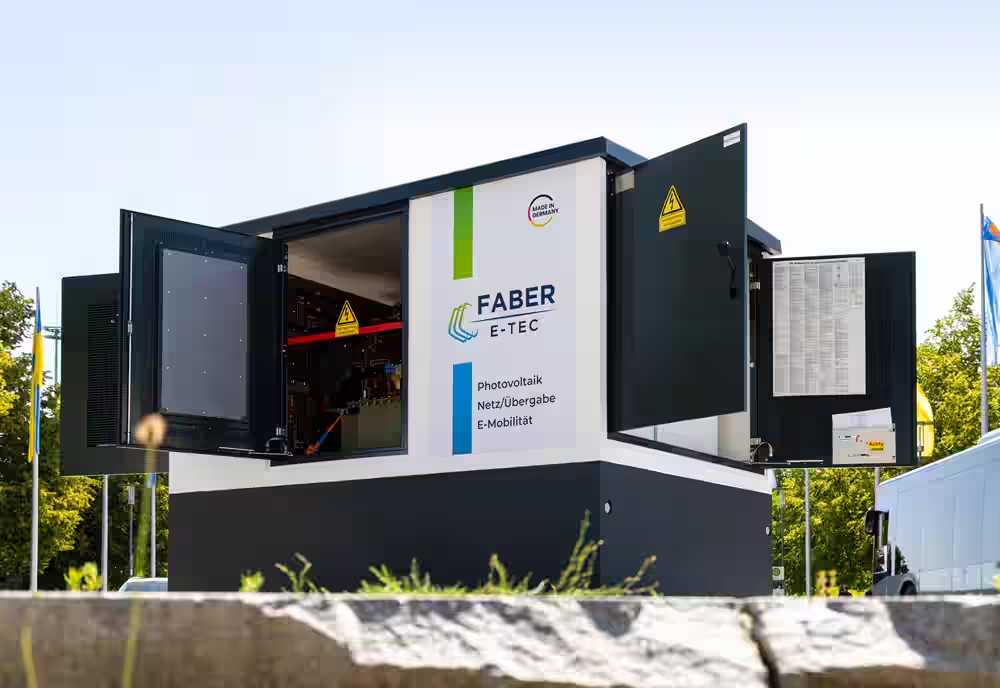
Enquire about the Hannover solar park station and prepare the grid connection properly
Whether it is a new PV project, expansion of existing feed-in capacity, or modernisation of a site, a clean start determines subsequent operational quality. If performance, area parameters, grid requirements, and expansion goals are defined early on, the Hanover solar park station be planned precisely and economically.
This reduces alignment loops, avoids later corrections and ensures a solution that remains stable even during growth. Clear upfront planning lays the foundation for technology, deadlines and expansion steps to come together smoothly.
Structuring the technical framework conditions early on not only ensures a better project start, but also creates a robust infrastructure for long-term operations.
Compact station Request a quote
"*" indicates required fields
Order solar park station directly now
"*" indicates required fields
E-mobility made easy with us!
"*" indicates required fields
7200 KW Secure container offer
"*" indicates required fields
"*" indicates required fields
Frequently asked questions about the Hannover solar park substation
What information is important for the initial planning of a solar park station?
The planned feed-in power, the available area, the desired voltage level and the planned expansion stage are important. In addition, information on the later development of the project helps to ensure that the station can be planned with a sensible reserve structure from the outset.
How can a solar park station remain technically manageable in the event of later expansion?
The decisive factor is a clear station logic instead of a pure initial design. If switch panels, protection technology and connection structure are properly prepared, additional power steps can be integrated in an organised manner. This keeps the system stable and makes subsequent conversions much easier.
Why is protection coordination so important for PV feed-in?
Because it determines how the station reacts in the event of a fault and how selectively protective functions work. Proper protection coordination improves availability, reduces consequential risks and helps to localise faults more quickly. This is a key factor for smooth system operation.
What are the real benefits of good documentation during operation?
It saves time and increases safety. Maintenance, troubleshooting and subsequent adjustments can be implemented much more efficiently if the protection parameters, switching logic and station structure are clearly documented. This is a major advantage, especially for growing projects.