Peak load management and BESS systems: In modern industrial and commercial operations (Industrial storage & Commercial warehouse), energy is more than just a cost factor - it is a strategic resource. However, especially when large machines start up or production processes run in parallel, short-term energy shortages can occur. Power peaks (peak loads). The problem is that energy suppliers often calculate the grid fees based on the highest power consumption of the year. A single outlier can drive up the electricity bill massively.
The solution is as efficient as it is simple: Peak load management (also known as Peak Shaving) with modern BESS System solutions (Battery Energy Storage Systems) from Faber E-Tec GmbH.
What is peak load management and why is it essential?
With peak load management, your energy consumption is monitored in real time. The aim is to smooth out the expensive „peaks“ in the load curve in order to achieve an even consumption profile.
This is how the principle works:
-
Monitoring: The system continuously measures the power requirement.
-
Unloading (Peak Shaving): If demand rises above a defined threshold value, the BESS switches on at lightning speed and supplies the required energy from the storage system instead of drawing it from the grid.
-
Charging: If the load drops again during operation, the BESS recharges itself automatically (e.g. via low-cost mains power or your own PV system).
The result for your company:
-
Massive cost reduction: By reducing the peak load, the grid fees provided are drastically reduced.
-
Consistent energy consumption: planning security for your budgeting.
-
Relief for the infrastructure: less stress for transformers and cables.

Why BESS System is the superior technology
In the past, companies used diesel generators or complex load shedding contracts to avoid peaks. A modern Battery Energy Storage System (BESS) offers decisive advantages here:
Response time in milliseconds: In contrast to slow generators, BESS systems compensate for load changes almost instantly.
Seamless integration: As an experienced EPC partner, we can easily integrate BESS into your existing infrastructure - whether transformer station, PV system or directly into the industrial hall.
Cost-effectiveness: A well-dimensioned storage system often pays for itself within a few years thanks to the savings in grid charges.
Maximum security of supply: Thanks to the intelligent EMS (Energy Management System) and BMS (Battery Management System), the system runs safely in continuous operation.
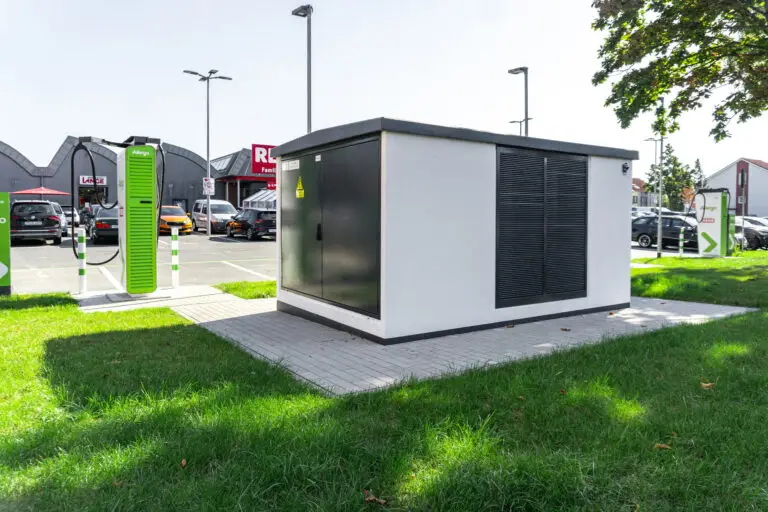
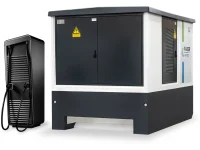
BESS compact station
Faber E-Tec: Your EPC partner for integrated energy storage
At Faber E-Tec GmbH, we see ourselves not just as a supplier, but as your EPC partner (Engineering, Procurement & Construction). This means that we do not supply you with a „box“, but with a turnkey energy centre.
Our BESS solutions are modular, scalable and designed for harsh industrial environments. We combine high-performance storage units with our tried-and-tested compact transformer stations to guarantee maximum efficiency and safety (VDE 4110/4120, IEC 62619).
Our BESS product solutions at a glance
Whether you are a medium-sized business or a large industrial park - we have the right scale.
| Model | Capacity | Ideal application |
|---|---|---|
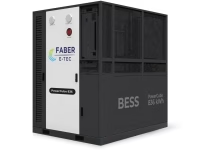
| Greencube 418 kWh | 418 kWh | Perfect for Trade. Compact and ideal for covering short-term peaks in smaller systems. |
| Greencube 835 kWh | 835 kWh | The solution for the Middle class. Highly efficient thanks to liquid cooling and EMS control. |
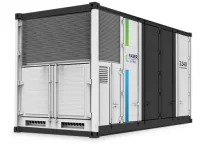
| BESS Container | 3,340 - 5,015 kWh | High-performance container solutions for Large-scale industry & energy parks. Maximum power for grid stabilisation and buffer operation. |
Focus on technology & security
Safety is our top priority. All Faber E-Tec systems utilise modern LFP cell technology (lithium iron phosphate), which is considered to be particularly safe and durable. Supplemented by efficient liquid cooling and integrated aerosol fire extinguishing systems, our storage systems are equipped for continuous industrial operation.
Conclusion: Competitive advantages through intelligent energy
The interaction of BESS and peak load management is no longer a luxury, but an economic necessity. With the solutions from Faber E-Tec GmbH, you secure three decisive advantages:
-
Cost reduction in grid fees.
-
Stable power supply for operational reliability.
-
Future-proof thanks to the option of PV integration and self-consumption optimisation.
Would you like to know how much you can save with peak shaving? Let us analyse your load curve. Contact us today for a no-obligation consultation.

Frequently asked questions about peak load management & BESS
What is peak load management (peak shaving)?
Peak load management refers to the targeted reduction or shifting of electricity consumption at times of particularly high demand. The aim is to smooth out the so-called load peaks. This is crucial for industrial companies in order to reduce grid charges, as these are often based on the highest measured 15-minute output of the year.
Why are peak loads so expensive for companies?
How does a battery energy storage system (BESS) help with peak load management?
A BESS (Battery Energy Storage System) is the most convenient method for peak shaving. Instead of switching off machines (load shedding), the storage system steps in: it supplies the required energy at the exact moment when the peak load occurs. There is no load on the public grid, operation continues undisturbed and there is no peak in the billing.
What methods are there for avoiding peak loads?
In addition to energy efficiency (general reduction in consumption), there are three main methods:
Load shedding: Switching off non-essential loads (disadvantage: interference with operation).
Demand response: Utilisation of incentives to reduce consumption.
Storage systems (BESS): Buffering of peak loads using batteries (advantage: no interruption to operation).
What are the advantages of peak load management for industry?
The biggest advantage is the immediate reduction in electricity costs (grid charges). It also increases security of supply, as the company's own reserves are available, and relieves the burden on the public electricity grid, which reduces the need for expensive infrastructure expansion.