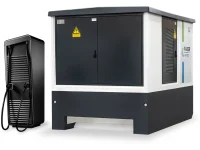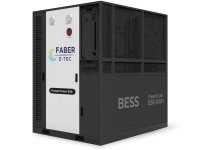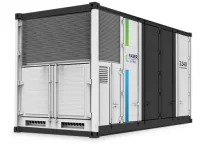
Around the Intersolar Europe 2026 and EM-Power Europe 2026 stehen PV, BESS, grid integration and Charging infrastructure in focus. Experts are gathering at the Munich Trade Fair Centre, to be under the umbrella of The smarter E Europe to discuss the latest solar panels, inverters, and storage technologies. Yet the most ambitious energy projects by project developers, EPCs, and public utilities face a central physical challenge: the generated or stored electricity must be fed into the power grid or drawn from it. This is where the Energy infrastructure to the decisive factor. Anyone who is currently on the Munich Trade Fair Centre talking about energy projects, the Transformer station think ahead early, because without a clean connection to the Medium voltage stays each PV system Idling.
Transfer & transformer station
Intersolar: Why PV (solar parks), BESS and charging infrastructure projects need transformer substations
The decentralised energy transition requires a massive expansion of grid capacities. Whether open-space system, industrial Battery storage or larger Charging hub for electric cars – above a certain power limit, the low-voltage grid is no longer sufficient. The systems must be connected to the Medium voltage be connected. Here, the Transformer station as an essential link between the local installation and the network operator's distribution grid.
A modern Compact transformer station transforms the voltage level, protects the installation from electrical faults and ensures that the strict connection conditions (TAR) of the network operators are met. As Transfer station it also defines the legal and technical boundary between the system operator and the energy supply company. Delays in planning for the medium-voltage connection almost always lead to construction delays of the entire project. Therefore, the following applies to EPCs, solar installers, planners and technical decision-makers: The clarification for the Mains connection and the specification of Transformer stations must be carried out in parallel with the plant design.
Substations for PV and solar parks
When planning large ground-mounted systems and commercial rooftop systems, the Substation for PV a core component. A Solar park generates direct current, which is converted into alternating current via inverters. To transport the high outputs of several megawatts into the supra-regional grid with minimal losses, this current must be in a tailor-made Substation for solar park- applications to the regional Medium voltage be upscaled.
The demands on these stations are high: they have to withstand extreme weather conditions, operate with low maintenance for decades and safely isolate the system in the event of a grid fault. The Faber E-Tec GmbH supplies transformer substations and switchgear stations that are robustly designed precisely for these application scenarios, perfectly matched to the generation profiles of large-scale photovoltaic systems and ensuring a smooth grid connection.
Photovoltaics / Solar farms
Transformer stations for BESS and battery storage systems
Another dominant theme of the EM-Power Europe 2026 is the grid integration of large-scale storage systems. BESS (Battery Energy Storage Systems) are essential for balancing the volatility of renewable energies, peak shaving and providing system services.
The technical challenge: A battery storage system operates bidirectionally. It draws electricity from the grid when there is a surplus and feeds it back in within milliseconds. A specific Transformer station for BESS must manage these rapid and highly cyclic load changes both thermally and electrically. The installed transformers and medium-voltage switchgear are subject to completely different load profiles here than in pure generation plants. Faber E-Tec understands these complex requirements and supports in particular EPCs for BESS projects thereby supplying the appropriate compact substation to connect storage projects to the power grid in a grid-supportive and secure manner.

BESS transformer substation
Transformer substations for charging infrastructure and e-mobility
The E-mobility scales rapidly, and with it the demand for high-power charging (HPC) parks. When several vehicles charge simultaneously at 300 kW or more, immense localised power demands arise that cannot be met by the local low-voltage grid.
For industrial companies, fleet operators and charging infrastructure developers, this means: a direct medium-voltage connection is essential. A specific transformer substation for charging infrastructure efficiently converts the voltage from the distribution network to the level of the DC charging points. When planning a charging park, the station must not only cover the current expansion stage, but ideally also provide reserves for future expansions.
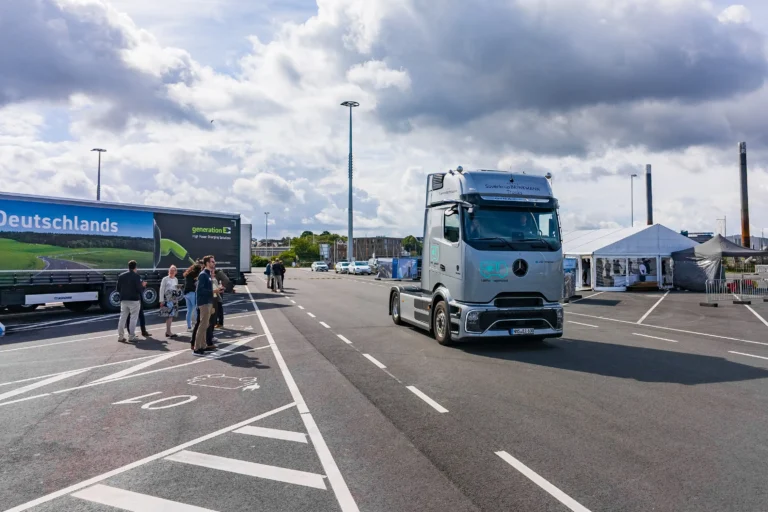
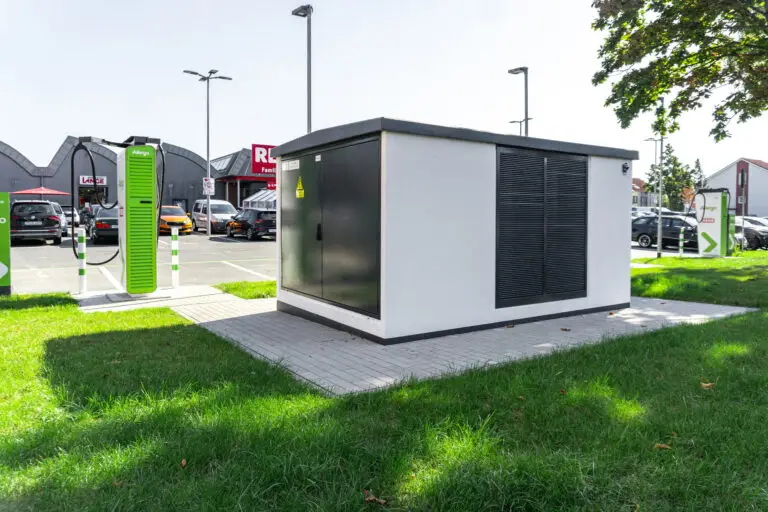
EV rapid charging
Intersolar Europe 2026 Munich: Technical clarification & nationwide project management by Faber E-Tec
The implementation of energy projects requires reliable partners with deep technical know-how in medium voltage. Even without an exhibition stand, Faber E-Tec is the point of contact for comprehensive services concerning the technical implementation of energy infrastructure. From our site in Bünde, we manage projects across Germany.
We know that every project – whether it is a PV system, battery storage system or charging park – places specific demands on protection technology, metering and the switchgear. Faber E-Tec delivers the appropriate compact substation and transfer station. Our focus is on clear, direct and professionally sound project management.
Bring your energy project online
The modules have been ordered, the storage cells reserved – but is your medium-voltage connection in place? Prevent grid connection bottlenecks and integrate the Transformer station from the very beginning in your project plan. Send us your project data and start the technical clarification with us now.
Frequently asked questions (FAQ) regarding the medium-voltage connection
From what system capacity is a dedicated transformer station required?
As a rule, a dedicated medium-voltage connection is required if the planned feed-in capacity of a PV system or the power demand for a charging park or battery storage system exceeds the capacity of the local low-voltage grid. According to current VDE application rules (VDE-AR-N 4110), this limit for connection to the medium-voltage grid is usually at an installed apparent power of approx. 135 kW and above – however, the individual grid connection commitment from the responsible grid operator is always the decisive factor here.